Why is my garage door so loud all of a sudden?
A garage door is one of the largest moving objects in your home, and it relies on dozens of small parts working in quiet coordination. When any of them wears, dries out, or works loose, the door tells you with sound. The good news is that the type of noise is a reliable clue. A rhythmic grinding or rumbling usually points to the rollers; a sharp pop or bang often means a torsion spring or a panel under stress; a high squeal almost always means metal-on-metal friction from parts that need lubricant; and a rattle or vibration that you feel through the wall is typically loose hardware.
Sacramento's climate plays a real role here. Our long, hot, dry summers bake the factory grease out of hinges, springs, and roller bearings faster than in milder coastal areas, so doors that ran quietly for years can suddenly turn squeaky by late summer. Valley dust and pollen also settle into the tracks and roller stems, acting like a fine grit that accelerates wear. Homes near the rivers or in older neighborhoods like East Sacramento and Curtis Park often have original steel rollers from the 1990s or early 2000s that are simply at the end of their service life.
Before you assume the worst, it helps to know that loud does not automatically mean expensive. Many doors that sound alarming just need cleaning, lubrication, and a hardware check. The sections below break the noises down so you can tell a quick fix from a real repair.
- Grinding or rumbling: worn rollers or a roller bearing that has failed
- Squealing or screeching: dry hinges, springs, or rollers needing lubricant
- Rattling or vibrating: loose nuts, bolts, brackets, or track fasteners
- Popping or banging: a stressed torsion spring, binding section, or panel issue
- Scraping: a track that is bent, misaligned, or has debris lodged in it
Quiet fixes you can do yourself
A large share of garage door noise responds to basic maintenance that any handy homeowner can do safely. The most effective and overlooked step is proper lubrication. Skip the WD-40 you may have under the sink, which is a cleaner and solvent rather than a lasting lubricant, and use a garage-door-specific silicone or lithium-based product. Wipe the rollers, hinges, springs, and bearing plates clean first, then apply lubricant sparingly to the moving metal points and run the door a few cycles to work it in. In our dry Sacramento summers, doing this two to three times a year makes a noticeable difference.
The second easy win is tightening hardware. A door cycles thousands of times a year, and every cycle introduces tiny vibrations that gradually loosen nuts and bolts. With the door closed, use a socket wrench to snug the bolts on the hinges, the brackets, and the track fasteners. Do not over-tighten, which can strip the holes or crack a panel, and never adjust anything if you are unsure what it does. A snug, secure hinge eliminates a surprising amount of rattle.
Finally, clear the tracks. Wipe down the inside of the vertical and horizontal tracks with a damp cloth to remove the Valley dust, cobwebs, and grime that build up and make rollers chatter. Tracks are meant to guide, not lubricate, so do not grease the track channel itself, only the rollers that ride in it. If you complete these three steps and the door is still loud, the problem is usually a worn part rather than a maintenance issue, and that is where a hands-on inspection helps.
- Use silicone or white-lithium garage door lubricant, not WD-40, on rollers, hinges, and springs
- Hand-tighten loose hinge, bracket, and track bolts with the door closed
- Clean tracks with a damp cloth; never lubricate the track channel itself
- Re-lubricate two to three times a year given Sacramento's dry, dusty summers
- Check that the rubber bottom weatherseal is not stiff or torn, which can add thump on contact
Noisy rollers, springs, and openers: what actually needs replacing
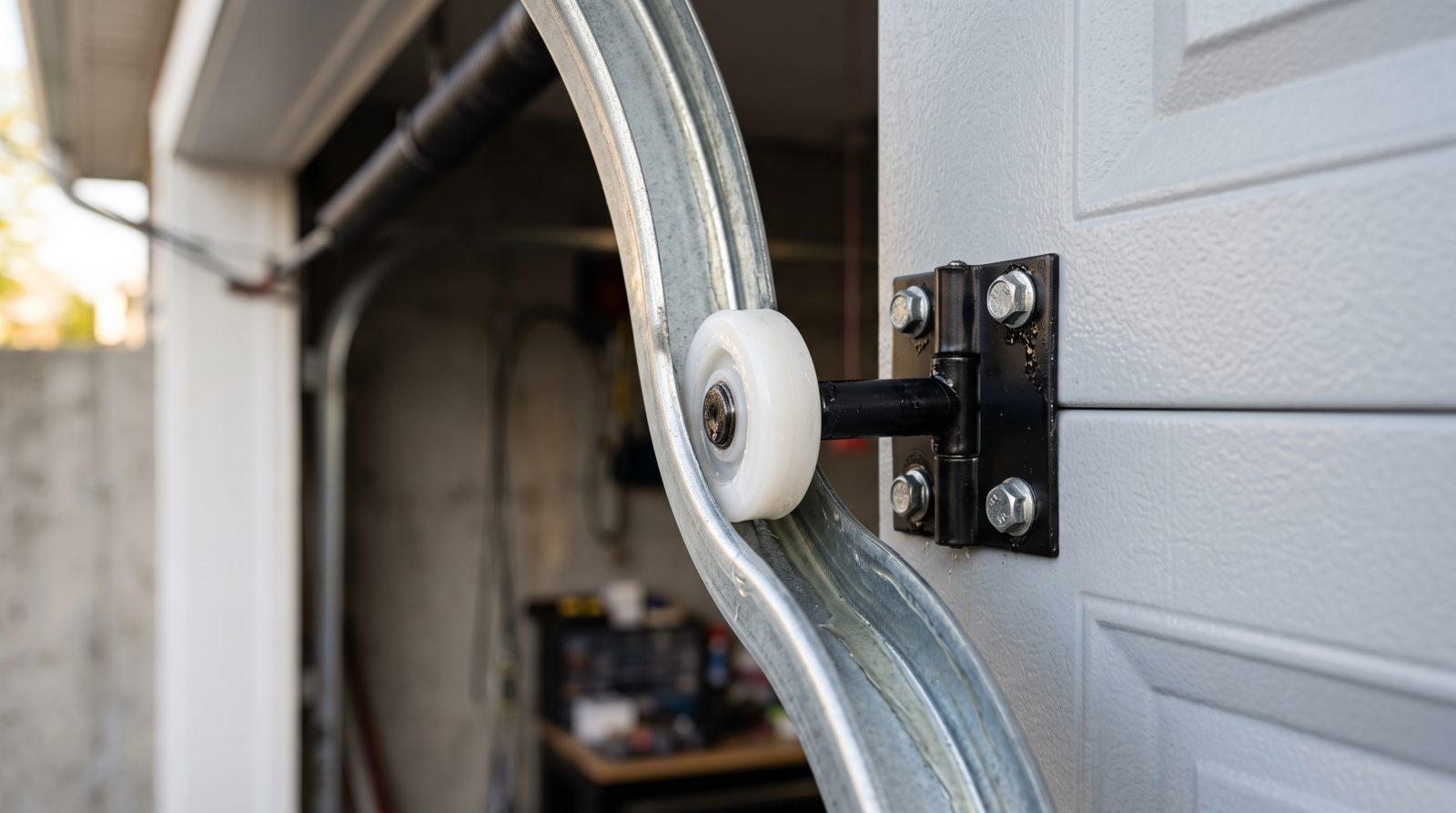
When maintenance does not solve the noise, the cause is usually a worn component. Rollers are the most common offender. Older builder-grade doors came with steel rollers that have exposed bearings; once those bearings dry out or wear, they grind and rumble no matter how much you lubricate them. Replacing them with sealed nylon rollers is one of the single biggest noise reductions available, because nylon runs quietly and does not need constant greasing. This is a job many Sacramento homeowners choose to have done professionally because individual rollers come out as a set and a few are tied to the door's tension system.
Springs are a different and more serious story. The torsion spring mounted above the door, or the extension springs running alongside the tracks, carry the entire weight of the door under extreme tension. A loud pop, a bang, or a sudden change in how the door balances can indicate a spring that is failing or has broken. Springs should not be adjusted or replaced by homeowners; the stored energy can cause severe injury. If your noise is accompanied by the door feeling heavy, opening crookedly, or refusing to stay halfway open, treat it as a spring issue and stop using the door until it is inspected.
The opener itself can also be the source. Older chain-drive openers are inherently louder and get noisier as the chain stretches and the motor ages. If the rumble seems to come from the unit on the ceiling rather than the door panels, the opener may need adjustment or, in some cases, replacement with a quieter belt-drive model. Costs for these repairs vary with the door size, hardware, and parts chosen, so treat any figures you see online as general industry ranges rather than a quote. A mobile technician can confirm the exact cause on-site and give you a clear price before any work begins.
- Worn steel rollers grind even when greased; sealed nylon rollers run much quieter
- Spring noise (pops, bangs, a heavy or crooked door) is a safety issue for a pro, not a DIY fix
- Older chain-drive openers grow louder with age; belt-drive units are quieter
- Hinge and bearing-plate wear can mimic roller noise and is checked during inspection
- Any cost figures online are industry ranges; an on-site look gives you the real number
How our mobile Sacramento service quiets your door
Because we are a fully mobile garage door company, there is no shop to drive to and no door to haul anywhere. We bring the rollers, lubricants, hardware, and tools to your driveway and diagnose the noise where the door actually lives, which matters because how a door sounds and balances in your own opening is the real test. We work across the greater Sacramento area, including neighborhoods like Natomas, Pocket-Greenhaven, Arden-Arcade, Carmichael, Rancho Cordova, Folsom, Roseville, and Elk Grove, so we are familiar with the door styles common to both older infill homes and newer tract developments.
A typical quieting visit starts with running the door through a full cycle while we listen and watch, because the moment a noise appears tells us where to look. From there we check roller and bearing condition, test the door's balance to rule out a spring problem, inspect the opener and its drive system, and tighten or replace worn hardware. We will always explain what we find and what is optional versus necessary, so you can decide what to address now and what can wait. Many noise complaints are resolved in a single same-day visit.
If the fix turns out to be a worn-out part, you get a clear explanation and an upfront price before we proceed, with no obligation to move forward. Our goal is a door that opens smoothly and quietly enough that you stop noticing it, which for a part of the house most people use several times a day is exactly how it should be. To get started, call or request a free quote and we will come to you.
- We come to you anywhere in the greater Sacramento area: no shop visit needed
- On-site diagnosis tests the door in its real opening, where the noise actually occurs
- Roller, spring-balance, opener, and hardware checks in one same-day visit
- Clear, upfront pricing before any work, with no obligation
- Familiar with both older Sacramento homes and newer suburban tract doors