What a Professional Garage Door Tune-Up Actually Includes
A real maintenance visit is far more than a squirt of oil. A garage door is a connected system of springs, cables, rollers, hinges, tracks, an opener, and safety sensors, and each part wears at a different rate. When one component drifts out of spec, the others take on extra load, so a thorough tune-up inspects and adjusts the whole assembly as a unit rather than chasing one squeak at a time.
Our goal on a maintenance call is to leave the door operating quietly and balanced, with every fastener and safety feature verified. We work systematically from the springs down to the floor sensors so nothing gets skipped, and we explain anything we find that's wearing so you can decide what to address now versus monitor.
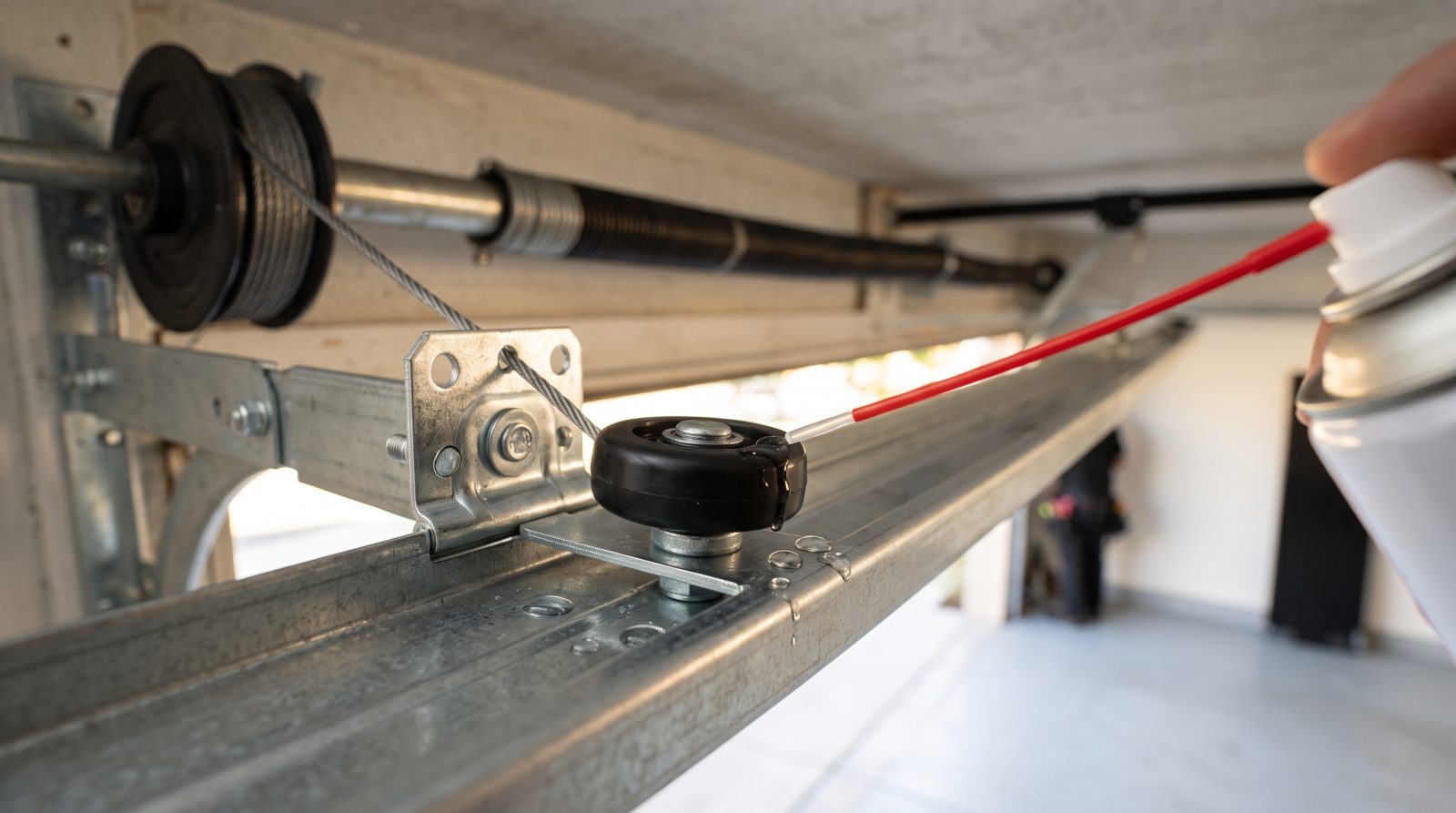
- Lubrication of rollers, hinges, springs, and bearings with the correct garage-door lubricant (not generic spray that attracts grit)
- Balance test: disconnecting the opener and checking that the door holds position at the halfway point
- Spring inspection for the right tension, rust, and stress cracks on torsion or extension springs
- Cable and drum check for fraying, slack, or misalignment
- Roller and hinge inspection, plus tightening of loose nuts, bolts, and bracket hardware
- Track inspection for bends, debris, and proper alignment
- Opener test, including force settings, travel limits, and chain or belt tension
- Safety check of the auto-reverse function and the photo-eye sensors near the floor
- Weather seal and bottom-gasket inspection for gaps, cracking, or rodent entry points
Why Sacramento's Climate Makes Maintenance Worth It
Sacramento's weather is hard on garage door hardware in ways homeowners don't always connect to a noisy or sticking door. Long stretches of extreme summer heat dry out factory lubricant and bake the grease off rollers and bearings, so metal starts grinding on metal. Many local garages are uninsulated, and an attached garage facing the afternoon sun can swing dramatically in temperature, which causes metal tracks and springs to expand and contract repeatedly throughout the day.
Winter brings the opposite stress. Cooler, damp Valley air and Delta fog raise humidity, and condensation on bare steel components encourages surface rust on springs, cables, and hinges, exactly the parts under the most tension. Spring steel is most likely to fail in cold weather because the metal is more brittle, which is why so many doors break on the first chilly morning of the season. Routine lubrication and a tension check ahead of those temperature swings are the cheapest insurance you can buy for the system.
Dust is the other quiet culprit. Valley dust and pollen settle into tracks and onto oiled surfaces, and when old grease turns to gritty paste it acts like sandpaper on rollers and bearings. Cleaning and re-lubricating with the right product keeps the door gliding instead of grinding, and it's a big part of why a maintained door runs noticeably quieter.
The Balance Test and Safety Check: The Heart of the Visit
If there's one thing a tune-up exists to protect, it's balance. A properly balanced door is held almost entirely by its springs, not the opener. When the springs lose tension or wear unevenly, the opener motor strains to do work it was never designed for, and that extra load shortens the life of the entire system. During the visit we disconnect the opener and move the door by hand. A balanced door should lift smoothly and stay roughly in place when stopped halfway. If it slams down or rockets up, the spring tension needs adjustment.
The safety check is equally important, especially in homes with kids, pets, or anyone parking a vehicle under the door daily. Modern openers have an auto-reverse system: if the door meets resistance on the way down, it should stop and reverse. We test this with a controlled obstruction, and we verify the photo-eye sensors mounted a few inches off the garage floor, which trigger a reverse if anything crosses the beam. Misaligned or dirty sensors are one of the most common reasons a door won't close or closes unsafely, and they're a quick fix when caught early.
We finish by confirming the opener's force and travel-limit settings are dialed in correctly. Settings that are too aggressive defeat the safety reverse; settings that are too weak cause the door to stop short or bounce back. Getting these right is the difference between a door that's merely working and one that's genuinely safe.
Signs Your Garage Door Is Overdue for a Tune-Up
Garage doors rarely fail without warning. They tend to get louder, slower, and rougher first, and those early symptoms are your cue to schedule maintenance before a part actually breaks. Catching a worn roller or a slightly loose cable during a routine visit is inexpensive; replacing a snapped spring or a door that's jumped its track after the fact is a bigger job.
As a general rhythm, an annual tune-up suits most single-family homes, while doors that cycle many times a day, such as a household with multiple drivers, benefit from a check every six months. If you've recently moved into a Sacramento-area home and don't know the door's history, a baseline inspection is a smart first step.
- Grinding, squealing, or banging noises during operation
- The door jerks, hesitates, or moves unevenly as it opens or closes
- One side of the door looks higher than the other, or it sags
- The opener strains, runs hot, or the motor sounds like it's working harder than it used to
- The door won't stay open halfway and drifts down on its own
- Visible rust, gaps, or fraying on the springs or cables
- Cracked, brittle, or missing weather seal at the bottom
- It's simply been more than a year since the door was last serviced
Mobile Service Across the Sacramento Area
Because we're a fully mobile operation, there's no shop to drive to and no door to haul anywhere. We bring a stocked service vehicle to your home, perform the full tune-up in your driveway, and most maintenance visits are completed in a single appointment. That convenience matters when your day is already full, and it means the door gets inspected exactly where it lives and works.
We serve homeowners throughout the greater Sacramento region, including East Sacramento, Land Park, Natomas, North Highlands, Citrus Heights, Carmichael, Fair Oaks, Elk Grove, Rancho Cordova, Folsom, Roseville, Rocklin, and West Sacramento. Suburban tract homes, older Midtown bungalows, and newer builds out toward the foothills all have different door styles and hardware, and a mobile visit lets us tailor the service to whatever is actually installed at your address.
We offer same-day scheduling whenever availability allows, and we'll always walk you through what we found before any additional work. If a tune-up turns up a part that's genuinely near the end of its life, we'll show you, explain the options as clear labeled ranges, and let you decide, no pressure and no surprise add-ons.