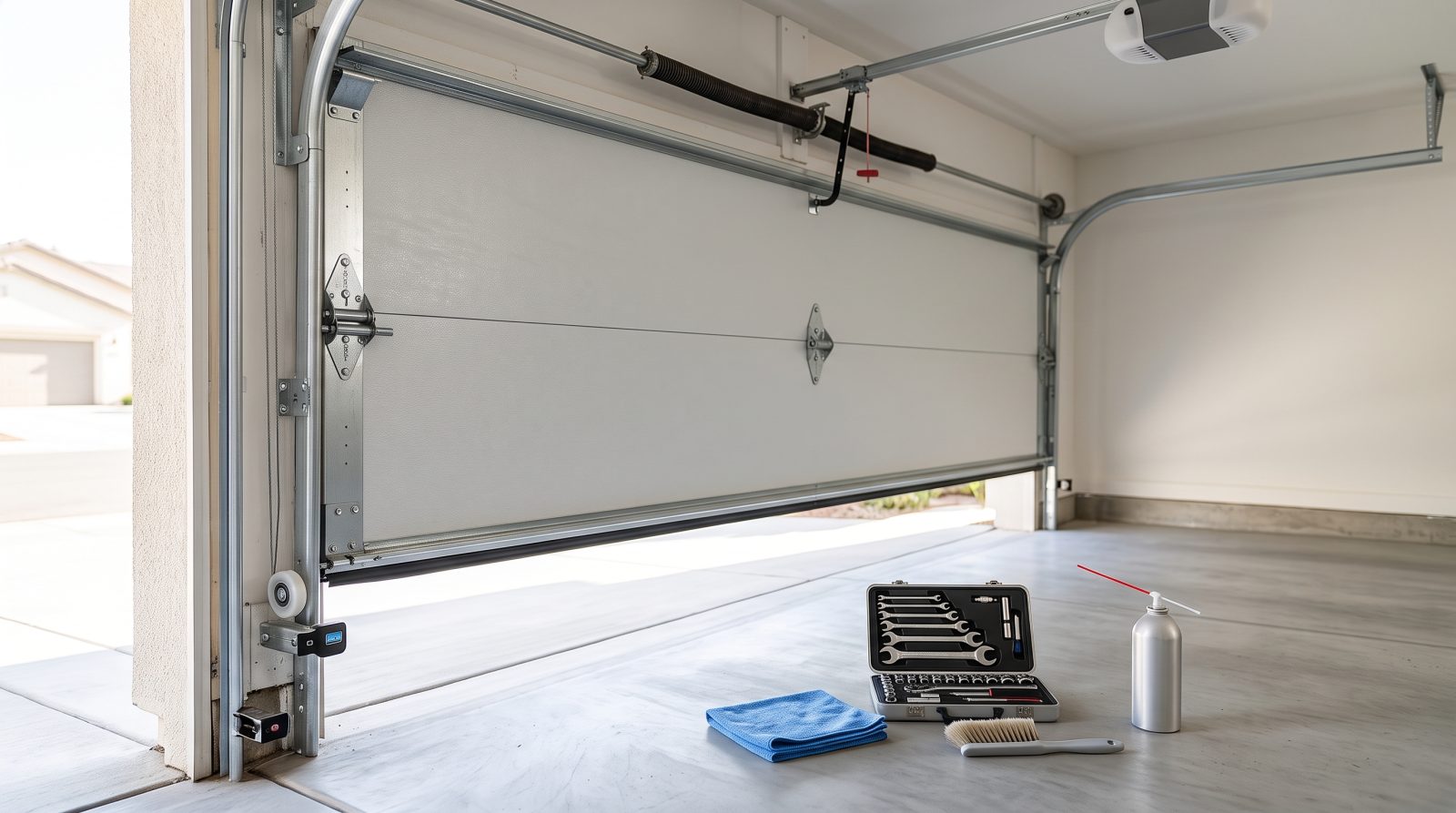
Why Sacramento's Climate Is Hard on Garage Doors
Most maintenance advice is written for some generic, mild climate. Sacramento is not that. The Central Valley delivers long stretches of dry triple-digit heat from June through September, and that heat does specific things to a garage door. Lubricant thins out and runs off the rollers, hinges, and spring coils, leaving metal-on-metal contact that grinds and wears. Steel panels expand in the sun and contract overnight, loosening fasteners over time. An attached, west-facing garage can turn into an oven by late afternoon, and a door that opened smoothly in spring can start to bind and chatter by August.
Then the season flips. From late fall into winter, valley fog rolls in off the Delta and can sit for days, blanketing everything in moisture. That damp air finds bare steel: tracks, springs, hinges, fasteners, and the bottoms of older wood doors. Surface rust starts quietly and, left alone, becomes pitting that shortens the life of springs and cables. The same wide temperature swings that make valley mornings crisp and afternoons warm also mean your door's metal is constantly expanding and contracting, which works hardware loose over a full year.
Spring brings its own nuisance. Sacramento's mature oaks, sycamores, and seasonal pollen drop a steady supply of debris, and a lot of it ends up in the bottom of your garage door tracks where the rollers ride. A pebble or a wad of leaves jammed in a track is one of the most common reasons a door suddenly jerks, binds, or reverses. None of these forces are exotic, but together they explain why a once-a-season routine matters more here than in a milder coastal town.
- Summer heat thins and bakes off lubricant, leaving rollers and springs running dry
- Delta and Tule fog drive winter moisture into bare steel, starting surface rust
- Wide daily temperature swings expand and contract panels, loosening fasteners over the year
- Spring oak pollen, leaves, and grit collect in tracks and cause binding or reversing
- West-facing attached garages get the worst of the afternoon heat load
The Quarterly Core Checklist (Do These Every Season)
A handful of tasks belong on every season's list because they protect the door year-round. Budget fifteen to twenty minutes once a quarter. Start with a simple look-and-listen test: stand inside, open and close the door fully with the wall button, and watch and listen. A healthy door moves evenly with a low, steady hum. Jerking, grinding, popping, scraping, or the door pausing at the same spot every time are all clues worth chasing down before they become a breakdown.
Next, tighten the hardware. Sacramento's temperature swings vibrate bolts and screws loose over time. With the door closed, snug up the roller-bracket bolts, hinge screws, and track-mounting brackets with a socket or wrench. Firm, not gorilla-tight, you do not want to strip the metal. Then clean the tracks: wipe out grit, leaves, and old grease with a damp rag, and clear anything wedged at the bottom where the door rests. Do not grease the inside of the tracks; rollers are meant to roll, not slide, and grease just collects more dirt.
Lubrication is the single highest-value habit in this climate, precisely because the heat keeps stripping it away. Use a garage-door-specific silicone or lithium spray, not WD-40, which is a cleaner and degreaser, not a long-term lubricant. Lightly hit the hinges, roller bearings (not nylon roller wheels), spring coils, and the bearings at the ends of the torsion bar. Wipe the excess. Finally, run the balance test below and check your safety reversal systems. These core steps alone prevent the majority of avoidable service calls.
- Run an open-and-close test; watch and listen for jerking, grinding, or pausing
- Tighten roller brackets, hinge screws, and track bolts (firm, not over-torqued)
- Wipe tracks clean of grit and debris; never grease the inside of the tracks
- Lubricate hinges, roller bearings, and spring coils with silicone or lithium spray, not WD-40
- Perform the balance and safety-reversal tests before trusting the door for another season
Season-by-Season: What to Prioritize and When
Spring (March-May) is your clean-out and reset season. After the wet months and the pollen drop, this is the time to clear tracks thoroughly, inspect for any winter rust on springs and hardware, and re-lubricate everything the damp air dried out. Check the weatherstripping along the bottom and sides while you are at it; a cracked bottom seal lets in the dust and the rare spring rain. Spring is also the best time to wipe down and inspect older wood doors common in East Sacramento, Land Park, and Curtis Park, since moisture and sun cycle hardest on wood.
Summer (June-August) is all about heat defense. Because triple-digit days strip lubricant fastest, mid-summer is worth a quick extra lube pass even if you did one in spring. This is also when an overworked opener can overheat or strain, so listen for new grinding or straining on hot afternoons. If your garage is attached and west-facing, check that the door still balances correctly, because heat-related expansion can subtly change how the door moves. Keep the door closed during peak heat when you can to reduce thermal load on the panels and opener.
Fall (September-November) is prep-for-fog season. Before the Delta fog and damp set in, make sure everything metal is lightly coated with lubricant so moisture has a harder time reaching bare steel. Inspect and replace worn weatherstripping now, while it is still warm and dry, so the garage stays sealed through winter. Winter (December-February) is your watch-and-protect season: keep an eye out for surface rust forming on springs, cables, and hinges during foggy stretches, make sure rollers are not seizing in the cold damp, and re-lube any spot that looks dry or rusty. A quick lube during a dry winter window pays off.
- Spring: deep-clean tracks after pollen drop, inspect for winter rust, re-lubricate, check seals
- Summer: extra mid-season lube pass; listen for opener strain on triple-digit afternoons
- Fall: coat all metal before fog season; replace worn weatherstripping while dry
- Winter: watch springs, cables, and hinges for fog-driven surface rust and re-lube dry spots
- Older wood doors (East Sac, Land Park, Curtis Park): inspect each spring and fall for moisture and sun damage
The Two Safety Tests Every Homeowner Should Run
Two simple tests tell you almost everything about whether your door is safe and well-adjusted, and they take under five minutes combined. The first is the balance test. With the door closed, pull the manual release cord (the red handle hanging from the trolley) to disconnect the opener, then lift the door by hand to about waist or chest height and let go. A properly balanced door will stay roughly in place. If it slams down or shoots up, the spring tension is off. That extra strain is being absorbed by your opener every single cycle, which shortens its life, and an unbalanced door is the leading sign of a spring problem. Reconnect the opener by pulling the cord back toward the door and running the opener once.
The second is the safety reversal test, required on all openers made since the early 1990s. With the door open, lay a solid object like a 2x4 lying flat or a roll of paper towels on the floor in the door's path and press close. The door should touch the object and immediately reverse. If it does not, the close-force setting needs adjustment or the system needs service. Then test the photo-eye sensors: with the door closing, wave a broom handle through the beam near the floor. The door should stop and reverse. If your sensors are not reversing, never leave the door operating, especially in a household with kids or pets.
These tests matter more than they sound. The photo eyes near the floor in Sacramento garages get bumped by stored bikes and sports gear, knocked out of alignment, and dirtied by dust and pollen, all of which can disable the safety reversal. Wiping the small lenses clean and confirming both indicator lights glow steady is a two-minute habit that keeps the most important safety feature on your door actually working.
- Balance test: disconnect the opener, lift the door halfway by hand; it should hold its position
- Reversal test: close on a flat 2x4 or paper-towel roll; the door must reverse on contact
- Photo-eye test: break the floor-level beam while closing; the door must stop and reverse
- Wipe sensor lenses and confirm both indicator lights are steady, not blinking
- A door that slams shut or won't reverse should be taken out of service until fixed
Know Your Limits: DIY vs. When to Call a Pro
Most of this checklist is genuinely homeowner-friendly. Cleaning tracks, tightening hardware, lubricating, replacing weatherstripping, wiping sensors, and running the safety tests are all safe and worth doing yourself. Doing them consistently is the best way to avoid surprise breakdowns and to extend the life of the door and opener. If you only remember one rule from this guide, remember the lubrication habit, because Sacramento heat undoes it faster than almost anywhere.
There is one category you should never DIY: anything under spring tension. Torsion and extension springs, along with the lifting cables, store an enormous amount of force, enough to cause serious injury if they release suddenly. Adjusting, repairing, or replacing springs or cables is genuinely dangerous and is a job for a trained technician with the right tools. The same goes for a door that has come off its tracks, a bent track, a snapped cable, or a panel that needs replacing. If your balance test fails, that is the spring talking, and it is a service call, not a DIY fix.
As a mobile garage door company serving the Sacramento area, we come to you, which makes the judgment call easy: if a task is on the safe list, knock it out yourself; if it touches springs, cables, tracks, or the opener's internals, leave it to us rather than risking injury or a bigger repair. A good rule of thumb is that if you find yourself fighting the door, hearing new loud bangs, seeing a gap or kink in a cable, or noticing the door has gone crooked, stop and request a free quote. Catching a worn part early is almost always cheaper and safer than waiting for it to fail.
- Safe DIY: cleaning tracks, tightening hardware, lubricating, weatherstripping, sensor cleaning, safety tests
- Call a pro: springs, cables, off-track doors, bent tracks, broken panels, opener internals
- A failed balance test means a spring issue, which is always a service call, not a DIY repair
- New loud bangs, a kinked or loose cable, or a crooked door are signs to stop and call
- Mobile service means a technician comes to your Sacramento-area driveway, no need to haul anything in