Why a Properly Sized Opener Matters More Than the Brand
The single most common mistake homeowners make when buying an opener online is choosing it by horsepower number or brand name instead of by what their door actually weighs. An opener doesn't lift your door by brute force; the springs counterbalance the door's weight, and the opener simply guides it up and down. If the springs are tired or mismatched, even a powerful new opener will strain, overheat, and fail early. That is why a real installation starts with checking your door's balance and spring condition before anything gets mounted to the ceiling.
Door weight in the Sacramento area varies a lot. A lightweight single aluminum or steel door in a Natomas tract home behaves very differently from a heavy insulated double door or a solid wood carriage-style door you'll see on older homes in East Sacramento and Land Park. The right opener is the one matched to that weight, the door's height, and how often it's used, not just the biggest motor on the shelf. Coming to your home lets us measure the real door rather than guess from a product page.
- We check spring balance first so the new opener isn't fighting an unbalanced door
- Opener strength is matched to your door's weight, height, and material
- Heavy insulated and wood doors need more capable drive systems than light steel doors
- A correctly sized opener runs quieter, draws less strain, and lasts longer
Chain vs. Belt vs. Screw Drive: Which Is Right for Your Garage
Almost every residential opener uses one of three drive systems, and the best choice usually comes down to where your garage sits in the house and how much noise you can live with. A chain drive uses a metal chain to pull the door, much like a bicycle chain. It is the most economical and extremely durable, but it is also the loudest, with a distinct rattle and vibration. Chain drives are a solid pick for a detached garage or a workshop where noise traveling into living space isn't a concern.
A belt drive does the same job with a reinforced rubber belt instead of a chain. It is noticeably quieter and smoother, which matters enormously in the many Sacramento homes where a bedroom, office, or nursery sits directly above or beside the garage. If anyone in the house is woken by the garage, a belt drive is almost always the upgrade worth paying for. Belt systems cost a bit more than chain but have become the most popular choice for attached garages.
A screw drive uses a threaded steel rod that the trolley travels along. It has fewer moving parts and a middle-ground noise level, and it can move the door quickly. The trade-off is that screw drives can be more sensitive to temperature swings, which is worth weighing given how hot a Sacramento garage gets in July and August; modern screw drives handle this far better than older ones, but it's a real consideration. We'll talk you through the honest pros and cons for your specific garage rather than pushing one type.
- Chain drive: lowest cost, most durable, loudest. Best for detached garages and shops
- Belt drive: quiet and smooth, ideal when living space sits above or beside the garage
- Screw drive: fewer moving parts and fast travel, middle-of-the-road noise
- Heat matters here. We factor Sacramento summer garage temperatures into the recommendation
Smart Wi-Fi Openers: What They Actually Add
Smart openers connect to your home Wi-Fi and pair with an app on your phone, and the convenience is genuinely useful once you live with it. You can check whether the door is open from anywhere, close it remotely if you left in a hurry, and get a notification when it opens or closes. For households juggling kids, dog walkers, and the constant question of whether the garage got left up overnight, that visibility removes a real daily worry.
The features that tend to matter most in everyday use are remote open and close, real-time open or closed status, alerts when the door moves, and guest access you can grant and revoke from your phone, which is handy for deliveries, house cleaners, or family. Many smart openers also integrate with package-delivery services and can be linked to smart-home systems and voice assistants, though it's worth confirming compatibility before you count on a specific integration.
Smart features can come built into a new opener or, in some cases, be added to a compatible existing opener with an add-on module. When you have us out, we'll tell you honestly whether your current unit can simply be made smart or whether a full opener replacement makes more sense, so you're not paying for a new motor you didn't need, or limping along with a workaround that won't hold up.
- See whether your door is open and close it from anywhere on your phone
- Get alerts when the door opens or closes, and grant temporary guest access
- Often works with voice assistants and smart-home setups (confirm compatibility first)
- We'll tell you if your current opener can be made smart instead of fully replaced
How a Mobile Opener Installation Works
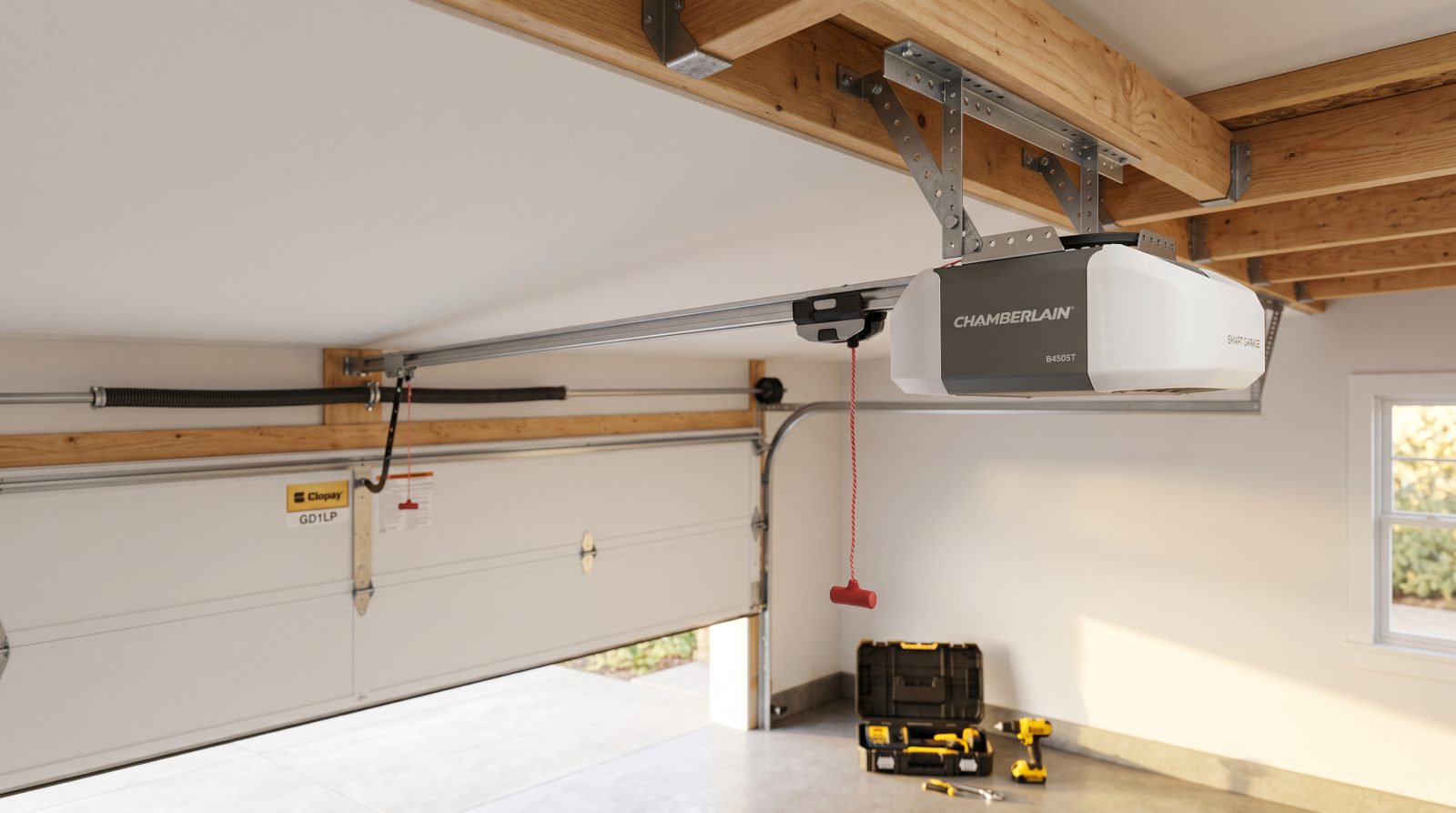
Because we're fully mobile, the whole job happens in your driveway and garage with no need to haul anything anywhere. A typical installation starts with confirming the door is balanced and the springs and cables are in safe condition, since installing an opener on a door with a failing spring just transfers the problem. From there we remove the old unit, mount the new rail and motor, set the travel and force limits so the door stops and reverses correctly, and program your remotes, wall control, and keypad.
Safety setup is not optional and it's where cheap or rushed installs cut corners. Every modern opener includes photo-eye sensors near the floor that stop and reverse the door if something is in the path, plus an auto-reverse force setting. We align and test those sensors and verify the auto-reverse with a real obstruction test before we consider the job done. We'll also walk you through the app setup if you've chosen a smart opener, and show you how to use the manual release in a power outage.
When everything checks out we run the door through several full cycles, confirm it's quiet and smooth, and clean up after ourselves. Before-and-after, you should notice a door that opens evenly, stops where it should, and doesn't announce itself to the whole street. If we find a related issue while we're there, such as worn rollers or a frayed cable, we'll point it out with a clear, labeled estimate rather than surprising you later.
- Full install done on-site: removal, mounting, travel and force setup, programming
- Photo-eye sensors aligned and auto-reverse safety tested with a real obstruction
- Remotes, wall control, keypad, and smart app all set up and demonstrated
- Several full test cycles plus cleanup before we call it finished
What Opener Installation Costs in the Sacramento Area
Pricing depends on the drive system you choose, whether it's a smart model, the condition of your existing door hardware, and whether any related parts need attention during the install. As a general industry guide, basic chain-drive openers sit at the lower end of the range, belt-drive and smart Wi-Fi models cost more for the quieter operation and added features, and the final figure includes both the unit and the labor to install and program it correctly. These are typical industry ranges to set expectations, not a quote for your specific door.
The reason we quote on-site rather than over a generic price chart is that the honest number depends on what we find. A door with healthy springs and good rollers installs cleanly; a door that also needs a spring or cable addressed for the opener to operate safely is a different conversation. We'd rather give you an accurate, itemized quote in your driveway and let you decide than tack on surprises afterward. Request a free quote and we'll come measure the real door.
- Chain-drive openers: generally the most budget-friendly option
- Belt-drive and smart Wi-Fi openers: a higher range for quieter, connected operation
- Quotes are itemized on-site so you see the unit and labor clearly, with no surprises
- Ranges shown are typical industry figures, not a fixed quote for your door