The Big Picture: A Garage Door Is a Balanced Counterweight System
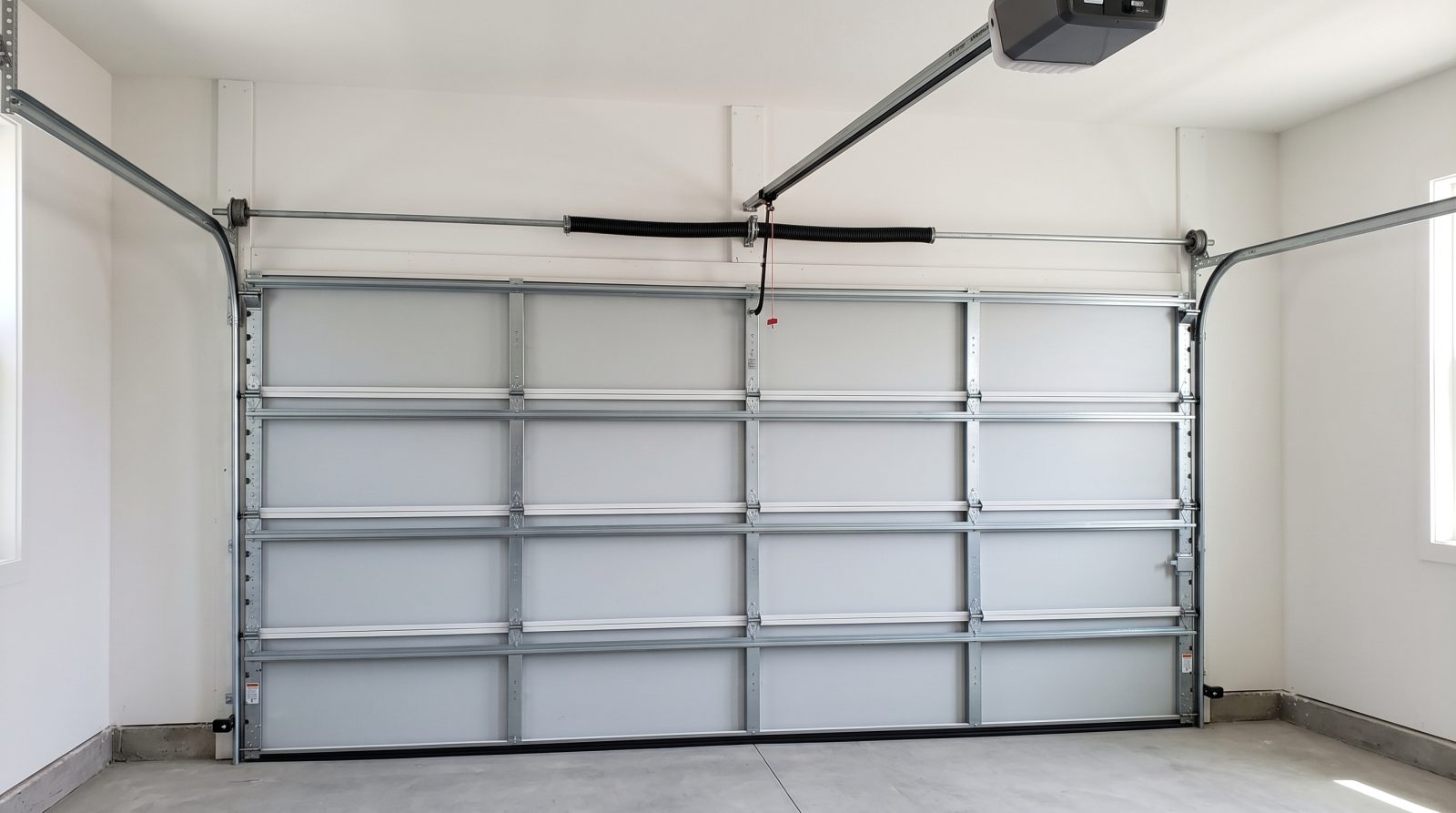
The single most important idea behind every garage door is balance. A double-wide door can weigh anywhere from roughly 130 to over 350 pounds depending on whether it is single-layer steel, insulated steel, or solid wood. Your opener motor is not strong enough to muscle that weight up and down by brute force, and it was never designed to. Instead, the door is counterbalanced by springs that store and release energy, so that at any point in its travel the door is close to weightless. When a door is properly balanced, you should be able to lift it by hand and it will more or less stay put at waist height. The opener's real job is simply to overcome friction and guide the door, not to lift its full weight.
This is why a broken spring is such a dramatic failure. Once the counterweight is gone, the opener is suddenly asked to lift the entire raw weight of the door, which it cannot do safely. The motor strains, the door may rise a few inches and stop, or it may not move at all. Understanding the counterweight principle explains almost every symptom you will ever see: a door that slams shut, a door that opens crooked, an opener that hums but does not lift, and a door that feels impossibly heavy when you try to raise it manually after a power outage.
Every other component on the door exists to support this balanced system, guide the door along a predictable path, or stop the door safely. Once you see the door as a balanced counterweight rather than a slab the motor drags around, the rest of the anatomy falls into place.
The Counterbalance: Torsion and Extension Springs
Springs are the heart of the system and also the part under the most stress. There are two common types on residential doors. Torsion springs are the more modern and more common setup: one or two tightly wound springs mounted on a metal shaft above the door opening. When the door comes down, cables wind the spring tighter, loading it with energy; when you open the door, that stored torque unwinds and helps lift the weight. Extension springs are the older style, mounted along the horizontal tracks on each side of the door, and they stretch and contract to provide the same counterbalancing force.
Springs are rated in cycles, where one cycle is a single open-and-close. A standard spring is often rated somewhere in the 10,000-cycle range, which sounds enormous until you realize a busy Sacramento family opening the door six to eight times a day can reach that in well under five years. This is why springs are the number-one wear item on any garage door. When they reach the end of their life they typically snap, often with a loud bang that homeowners describe as sounding like a gunshot from the garage.
A critical safety note: springs hold a tremendous amount of stored energy even when the door is sitting still. Adjusting, winding, or replacing a torsion spring requires specialized winding bars and proper technique, and it is the one repair we strongly urge homeowners never to attempt themselves. A spring that releases unexpectedly can cause serious injury. This is squarely the kind of job our mobile technicians handle on-site, with the right tools, at your home.
Cables, Drums, Rollers and Tracks: How the Door Actually Moves
If springs provide the muscle, the cables and tracks provide the choreography. Steel lift cables run from the bottom corners of the door up to grooved drums mounted on the torsion shaft. As the spring shaft turns, the cables wind onto or off of these drums in a precise spiral, lifting both bottom corners of the door evenly. When everything is in tune, both sides rise at exactly the same rate and the door stays square in its opening. When a cable frays, slips off its drum, or breaks, one corner drops and the door goes crooked or jams in the track, which is one of the most common service calls we run.
The door itself rides on rollers, small wheels with stems that sit inside the vertical and horizontal tracks bolted to your garage framing. Better rollers use sealed nylon or ball-bearing wheels that roll quietly; cheaper steel rollers tend to get loud and wear out faster. The tracks guide the rollers through the characteristic L-shaped path that takes the door from vertical (closed) to horizontal (open and tucked up against the ceiling). Bent tracks, loose mounting brackets, or rollers that have lost their bearings all show up as grinding, binding, or a door that shudders as it travels.
Holding the panels together are the hinges between each section, and at the very bottom a rubber weather seal called the bottom astragal. Sacramento's hot, dry summers are hard on this seal and on the weatherstripping around the door; rubber dries out, cracks, and lets in dust, drafts, and the occasional uninvited pest. Because we come to you, replacing worn rollers, realigning a track, or swapping a brittle bottom seal is the kind of quick on-site work that quietly restores years of smooth, quiet operation.
The Opener and Its Drive System
The opener is the motorized unit mounted on your garage ceiling, and contrary to popular belief it does relatively little lifting. Its motor turns a drive mechanism connected to a trolley that runs along a rail above the door; the trolley is attached to the top of the door by an arm, and as the trolley travels the rail it pushes the door closed or pulls it open along its tracks. There are three common drive types. Chain-drive openers use a metal chain and are durable and affordable but tend to be the loudest, which matters in Sacramento homes where bedrooms sit above or beside the garage. Belt-drive openers swap the chain for a reinforced rubber belt and run noticeably quieter. Screw-drive and newer direct-drive or wall-mount jackshaft units offer their own balance of noise, speed, and maintenance.
Inside the opener's logic board are travel limits and force settings, the brain that tells the motor exactly how far to move the door and how much resistance is normal before it should stop. When these settings drift out of adjustment, you get the classic complaints: a door that stops short of closing, reverses for no reason, or leaves a gap at the bottom. Often the fix is a calibration rather than a part replacement.
Modern openers also bring conveniences like battery backup, which is genuinely useful given that California now requires battery backup on new residential openers so the door still works during a power outage, something every Sacramento homeowner who has lived through a summer grid strain or a winter storm can appreciate. Wi-Fi connectivity, smartphone control, and rolling-code remotes that change their security code with every use round out what a current opener offers. If your opener predates these features, an upgrade is often worth discussing during a visit.
The Safety Systems That Protect Your Family
Since the early 1990s, federal safety standards have required residential garage door openers to include automatic reversing systems, and these are arguably the most important parts on the whole door. The most visible is the photo-eye system: two small sensors mounted near the floor on each side of the door, about six inches up, that shine an invisible infrared beam across the opening. If anything breaks that beam while the door is closing, a child, a pet, a backed-out bicycle, the opener immediately stops and reverses the door. Misaligned or dirty photo eyes are one of the most common reasons a door refuses to close and instead reverses with a flashing light, and they are also among the simplest issues to correct.
The second safety layer is mechanical force sensing. The opener constantly monitors how much resistance it meets; if the closing door contacts an object before reaching the floor, the added force tells the motor to reverse. This is what protects against obstacles the photo eye might not catch. Both systems should be tested periodically, and the standard at-home test is simple: lay a sturdy object like a roll of paper towels flat under the door and watch it reverse on contact.
A properly functioning manual release is the final safety feature. The red cord hanging from the trolley disconnects the door from the opener so you can operate it by hand during a power outage, but it should only ever be pulled when the door is fully closed, because a door with a broken spring will come crashing down if released while open. These safety systems are not optional extras; they are the difference between a minor inconvenience and a serious accident, and verifying them is part of every thorough service visit.
How Sacramento's Climate Shapes the Way Your Door Ages
Sacramento's Mediterranean climate, long stretches of intense, dry summer heat followed by cool, damp winters, leaves its fingerprint on garage door systems. The Valley's summer heat and the relentless cycle of hot days and cooler nights are tough on lubricants and on rubber. Factory grease can bake out of rollers and hinges, weather seals dry and crack, and metal parts expand and contract with the daily temperature swing. Doors that were whisper-quiet in spring often start to squeak and grind by late summer simply because the lubrication has dried up.
Dust is the other Valley reality. Fine Central Valley dust and pollen work their way into roller bearings, hinge pivots, and the opener's moving parts, acting like a grinding paste that accelerates wear. Garages that open onto unpaved alleys, gravel, or active landscaping projects, common around the region's older neighborhoods and newer outlying developments alike, tend to collect grit faster. Periodic cleaning and re-lubrication of the rollers, hinges, springs, and rail does more to extend the life of a Sacramento door than almost anything else.
Because we are a mobile, we-come-to-you operation across the Sacramento area, we see how these local conditions play out from Elk Grove to Roseville to East Sac. A same-day tune-up, fresh lubrication, a realigned photo eye, or a worn roller swap done in your own driveway is usually all it takes to keep the system balanced and quiet for years. If something on your door is grinding, sagging, sticking, or simply does not sound right, you can call or request a free quote and we will bring the shop to you.