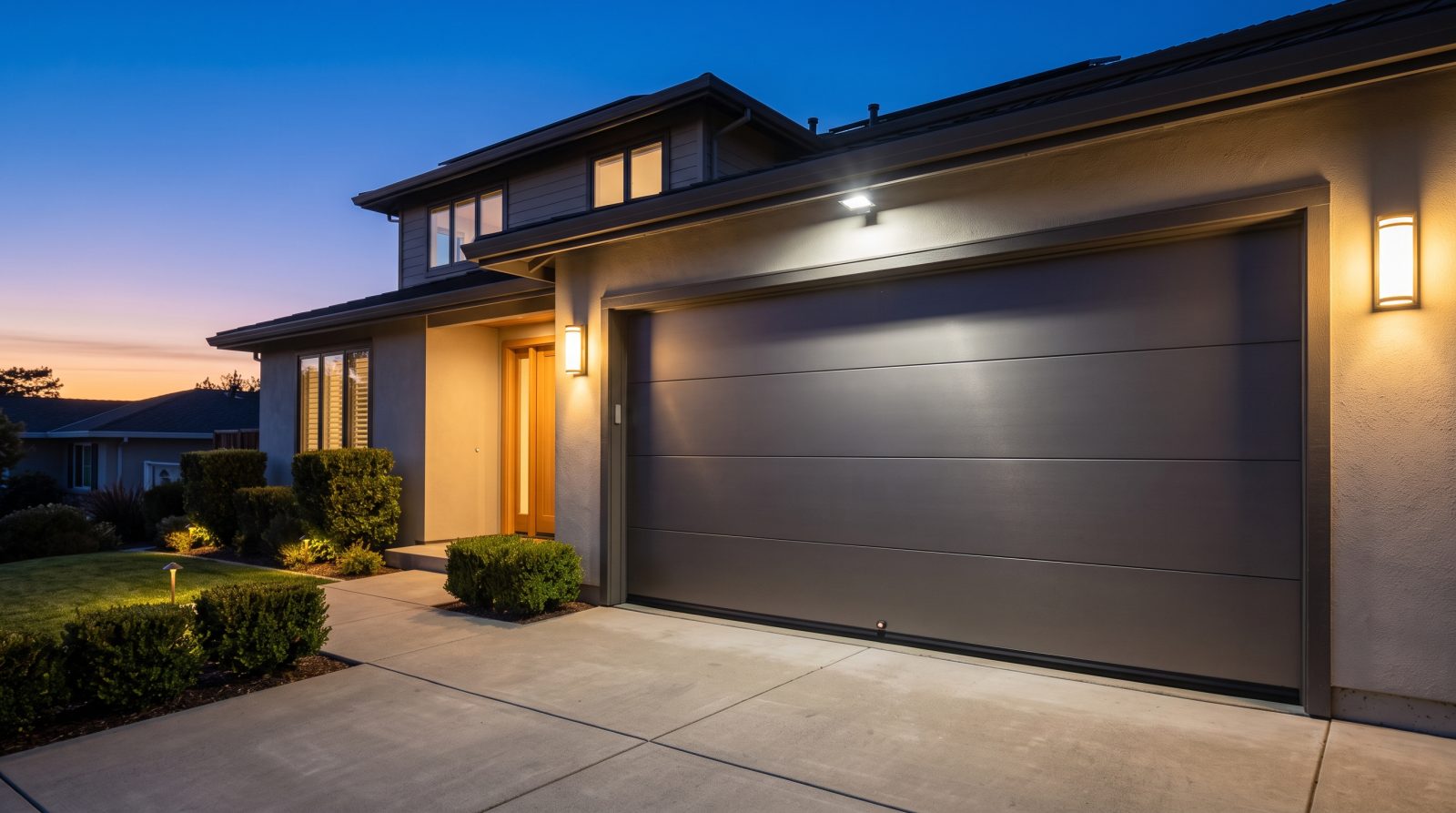
How Burglars Actually Get Into Sacramento Garages
Before you can secure a garage, it helps to understand how people get in, because the methods are more low-tech than most homeowners expect. The most common entry point isn't a sophisticated hack, it's the emergency release cord. Every sectional garage door has a red emergency-release handle hanging from the trolley so you can disengage the opener during a power outage. On many doors, a thief can slip a coat hanger or stiff wire through the small gap at the top of the door, hook that release cord, pull it, and then lift the door by hand. This takes seconds and leaves almost no damage.
Other entry methods are even simpler. Older openers built before rolling-code technology can be defeated with a 'code grabber' or a universal remote that cycles through fixed codes. Side doors and the pass-through door from the garage into the house are often left unlocked or fitted with a flimsy interior knob lock that was never meant to stop a determined intruder. And in plenty of cases, the garage was simply left open, a remote was clipped to a visor in an unlocked car parked in the driveway, or a keypad code was something obvious like 1-2-3-4.
Sacramento's climate adds its own wrinkle. Long, hot summers mean a lot of homeowners run the garage door partway up for ventilation while working in the garage or to keep cars cooler, and a partially open door is an open invitation. Detached garages and alley-access setups common in older neighborhoods like Land Park, East Sacramento, and Curtis Park give intruders more privacy to work, while newer suburban tracts in Elk Grove, Roseville, and Folsom often back to greenbelts or open lots that provide quiet cover behind the home.
- Coat-hanger attack on the emergency-release cord through the top gap of the door
- Old fixed-code or worn openers defeated by code grabbers and universal remotes
- Unlocked or weakly locked pass-through door from garage into the house
- Remotes left in unlocked cars and obvious keypad codes (birthdays, 1234)
- Doors propped partway open for ventilation, especially in summer heat
Secure the Emergency Release and the Door Itself
Because the emergency release is the number-one vulnerability, it's the first thing to address. A simple and inexpensive fix is a release-lock shield or a zip-tie solution that prevents the cord from being snagged from outside, while still allowing you to disengage the trolley from inside during an outage. We can also reposition or shorten the release handle so it can't be hooked through the top gap. If your door has a large gap at the top, adding weather seal and proper top brackets both improves security and keeps Sacramento's summer heat and winter rain out.
The door itself should also resist being forced or lifted. A side-mounted slide lock or a dedicated garage-door deadbolt physically pins the door to the track so it cannot be raised even if someone defeats the opener. For attached garages, the interior pass-through door should be treated like any exterior entry door: a solid-core door, a real deadbolt, and a reinforced strike plate with long screws into the framing, not the short screws that ship with most locksets. This single upgrade turns the door between your garage and your living space into a genuine barrier instead of a speed bump.
If your door is older, damaged, or sagging, security and safety overlap. Worn rollers, frayed cables, and a door that doesn't seat fully against the floor create gaps that make prying and hooking easier. As a mobile service, we inspect the full door system, hardware, tracks, springs, cables, rollers, and seals, so the door not only operates smoothly but also closes tight and resists tampering.
- Install a release-lock shield or reposition the emergency cord to block coat-hanger attacks
- Add a manual slide lock or garage-door deadbolt to physically pin the door shut
- Upgrade the interior pass-through door with a deadbolt and reinforced strike plate
- Seal large top and bottom gaps that let tools reach the release or pry the door
- Replace worn rollers, cables, and seals so the door closes tight with no exploitable gap
Upgrade the Opener, Remotes, and Keypad
The opener is the brain of your garage, and modernizing it closes off some of the most common electronic and convenience-based break-ins. If your opener predates rolling-code technology, replacing it removes the risk of code-grabbing entirely, because rolling-code systems generate a new code every time the remote is used. Newer openers also support encrypted communication and smartphone control, which lets you confirm the door is closed from your phone and get an alert if it opens unexpectedly while you're at work or on vacation.
How you handle remotes and keypads matters just as much as the opener model. Never leave a remote clipped to the visor of a car parked outside, a broken car window plus a garage remote equals a key to your house. A keychain remote or in-vehicle HomeLink button you program yourself keeps the remote with you. For exterior keypads, choose a non-obvious code, change it periodically, and delete codes you've shared with house sitters, contractors, or dog walkers once the job is done. Many modern openers let you issue temporary codes that expire automatically, which is ideal for one-time deliveries or service visits.
Two features worth enabling on a capable opener are auto-close and vacation or lockout mode. Auto-close shuts the door after a set time so it's never accidentally left open all night, and lockout mode disables all remotes and keypads while you're away, allowing the door to be opened only from inside. These are exactly the kinds of settings we configure during a mobile service call, because they're easy to overlook in the manual but genuinely change how secure the system is day to day.
- Replace pre-rolling-code openers to eliminate code-grabbing attacks
- Use a keychain or in-car HomeLink remote instead of leaving one on the visor
- Pick non-obvious keypad codes, change them regularly, and remove shared codes after use
- Enable auto-close so the door never sits open overnight by mistake
- Turn on vacation/lockout mode to disable remotes while you travel
Lighting, Visibility, and Smart Habits for Sacramento Neighborhoods
Hardware stops a break-in once an intruder commits, but good lighting and visibility often stop them from trying in the first place. Motion-activated lights over the garage and along side-yard approaches remove the dark, private working space that burglars prefer, which is especially valuable for detached garages and alley-access homes in older Sacramento neighborhoods. Pair lighting with a camera or video doorbell aimed at the driveway and you create both deterrence and a record. Many homeowners run these alongside a smart opener so they can see and confirm the door's status from anywhere.
Frosted or covered garage windows are another easy win. Clear windows let a passerby inventory your tools, bikes, and whether a car is gone, signaling that no one's home. Frosting film or simple interior coverings keep the contents private without giving up daylight. Inside, avoid storing high-value, easy-to-grab items right by the door, and keep ladders secured so they can't be used to reach a second-story window.
Finally, the cheapest security upgrades are habits. Close the door every time, even for a quick errand, and resist leaving it cracked for ventilation when you step away. Don't leave the interior pass-through door unlocked just because the garage door is down, treat it as a real exterior door. When you go on vacation, set lockout mode, ask a trusted neighbor to keep an eye out, and avoid announcing travel plans publicly. In a region where heat keeps people coming and going from the garage constantly, building the habit of fully closing and locking up is the difference-maker.
- Add motion-activated lighting to remove the dark cover burglars rely on
- Use a driveway camera or video doorbell for deterrence and a record of activity
- Frost or cover garage windows so the contents and your absence stay private
- Keep ladders and high-value items away from the door and out of easy reach
- Build the habit of fully closing the door and locking the interior door every time
How Our Mobile Service Hardens Your Garage On-Site
Securing a garage isn't a single product, it's a system: the door, the opener, the locks, the seals, and the way you use them. As a fully mobile Sacramento garage door service, we come to your home, assess all of those layers in one visit, and handle the work on the spot. That includes inspecting and adjusting the door so it seats tight, repositioning or shielding the emergency release, installing slide locks or deadbolts, replacing worn hardware that creates gaps, and tuning or upgrading the opener with rolling-code security, auto-close, and lockout features.
Because we travel to you, there's no hauling a heavy door or opener anywhere, and we can evaluate the security picture in the context of your actual home, whether that's a detached garage off a Land Park alley, an attached two-car in an Elk Grove subdivision, or a townhome in Midtown. We can also reprogram remotes, reset keypad codes, and walk you through the settings so you leave the visit knowing exactly how your system protects you.
If you're not sure where your weak points are, that's exactly what a security-focused inspection is for. We'll point out the realistic risks, prioritize the fixes that matter most for your specific door and neighborhood, and give you honest, no-pressure options. Costs vary with the hardware and the condition of your existing door, so we provide clear, itemized ranges before any work begins. To get started, call or request a free quote and we'll bring the shop to your driveway.
- One mobile visit covers the door, opener, locks, seals, and usage habits together
- We shield the emergency release, add deadbolts/slide locks, and seal exploitable gaps
- Opener work includes rolling-code upgrades, auto-close, lockout mode, and remote reprogramming
- Same-day mobile service across Sacramento, from Land Park and Midtown to Elk Grove and Folsom
- Free, no-pressure quote with clear pricing ranges before any work starts