Why Garage Door Insulation Matters More in Sacramento
Sacramento's climate is a classic Central Valley pattern: long, intensely hot, dry summers with frequent triple-digit afternoons, followed by mild, often damp winters. That combination puts unusual stress on a garage door. During summer, an uninsulated steel door facing west or south can become hot to the touch and turn the garage into a heat trap that stays warm long after sunset, even once the Delta breeze rolls in. In winter, the same thin door does little to hold in warmth on the chilly, foggy mornings the region is known for.
The problem compounds when a garage shares walls or a ceiling with living space, which is extremely common in Sacramento's suburban neighborhoods like Natomas, Elk Grove, Rancho Cordova, and the newer developments out toward Folsom and Roseville. Heat that builds in the garage migrates into adjacent bedrooms, bonus rooms, and hallways, forcing your HVAC system to work harder during the months it is already running hardest. An insulated door slows that heat transfer and helps your air conditioning hold the line.
Garages here also do double duty. Many Sacramento homeowners use them as gyms, workshops, home offices, or hobby spaces, and a growing number have converted or semi-converted the space. If you spend real time in your garage, insulation is the difference between a usable room nine months of the year and a space you avoid every afternoon from June through September.
- Summer comfort: slows radiant heat from a sun-baked door into the garage and adjoining rooms
- Energy use: reduces the heat load your AC fights during long Valley heat waves
- Winter warmth: helps retain heat on cold, foggy mornings
- Usability: makes a garage gym, shop, or office tolerable in peak heat
- Quieter operation: insulation dampens panel rattle and outside street noise
Understanding R-Value: What the Numbers Actually Mean
R-value measures how well a material resists heat flow. The higher the number, the more it slows heat moving through it. For garage doors you will commonly see figures ranging from a bare single-layer door with an R-value near zero, up through insulated doors rated roughly in the R-6 to R-19 range depending on construction and material. It is important to read these numbers with realistic expectations rather than as a guarantee.
First, the rated R-value usually describes the insulation core at its center, not the whole door system. Seams, the door's frame, and especially gaps around the perimeter all leak heat, so real-world performance is typically lower than the headline number. A door marketed at a high R-value still loses efficiency if the weatherstripping is cracked or the bottom seal no longer meets the floor, which is common on older Sacramento doors that have endured years of UV and heat.
Second, more R-value is not automatically better for every home. For an attached garage with living space above or beside it, a higher R-value (often in the R-12 and up territory) makes a real comfort difference. For a fully detached garage you only use for storage, a moderate rating may be plenty. The right target depends on how the space is used, how much sun the door takes, and your comfort goals, not just chasing the biggest number on the label.
- R-value = resistance to heat flow; higher resists more
- Rated numbers describe the core, not the whole installed door
- Air gaps and worn seals quietly erode real performance
- Attached, sun-facing, or living-adjacent garages benefit most from higher ratings
- Detached storage garages often do fine with moderate insulation
Insulation Materials and Methods Compared
There are three main paths: a do-it-yourself kit applied to your existing door, a factory-insulated replacement door, and improving the seals around whatever door you have. Each has a place depending on budget and goals. As industry ranges, DIY kits are generally the least expensive option, factory-insulated doors cost the most because you are replacing the whole assembly, and seal upgrades are inexpensive but limited in what they can achieve alone. These are general ranges, not quotes; the right figure depends on your door size, material, and condition.
DIY kits usually use rigid foam board (polystyrene) panels or reflective foil-faced batts that you cut to fit each door section. They are a reasonable upgrade for a steel door in sound condition and can meaningfully cut radiant heat. The trade-offs are added weight, which can throw off the door's spring balance if overdone, and a finish that is not as clean as a factory door. For Sacramento's heat, reflective foil facing oriented toward the sun side can help reduce radiant gain.
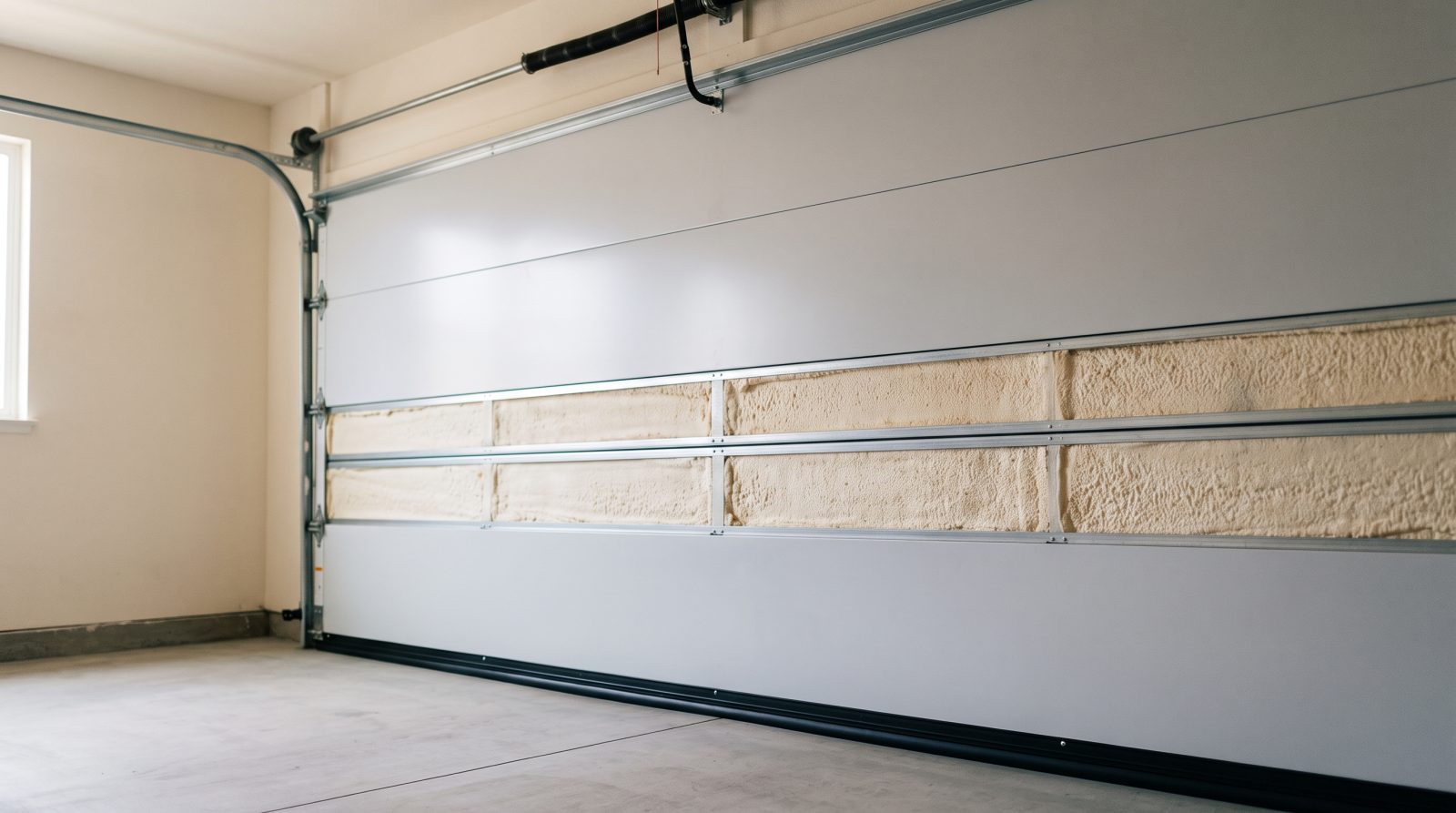
Factory-insulated doors come in two common constructions. Polystyrene (rigid foam panels sandwiched in the door) offers solid mid-range insulation at a friendlier price. Polyurethane (foam injected and expanded to bond the layers together) generally delivers higher R-value per inch, a stiffer and more durable door, and better sound dampening, at a higher cost. Both are far better than a single-layer door, and either is a strong choice for a hot, sun-exposed Sacramento elevation.
Whatever route you choose, do not overlook the door's balance and seals. Adding weight to a door changes the load on its torsion or extension springs, and an unbalanced door wears its opener and rollers faster. This is exactly the kind of check worth having a technician verify, which we can do at your home as part of an insulation-related visit.
- DIY foam-board / foil kits: lowest cost, decent radiant reduction, watch added weight and door balance
- Polystyrene factory doors: solid mid-range R-value at a moderate price point
- Polyurethane factory doors: highest R-value per inch, stiffer, quieter, higher cost
- Seal and weatherstrip upgrades: inexpensive, essential, but limited on their own
- Any added weight should be balanced against the door's springs and opener
Sealing the Gaps: Where Sacramento Garages Really Lose Air
Insulating the door panels solves only half the problem. Most of the felt-it-immediately heat and dust intrusion in a Sacramento garage comes through gaps, and the bottom seal is the worst offender. Years of hot, dry weather harden and crack rubber bottom seals, and uneven or settled concrete slabs (common in older Sacramento and surrounding county homes) leave daylight gaps where heat, dust, and the occasional pest get in. Replacing a worn bottom seal is one of the cheapest, highest-return improvements you can make.
The perimeter weatherstripping along the sides and top of the door does the same job vertically. In our climate, UV exposure degrades this stripping over time, so it pulls away, flattens, or splits. Combined with the dust that Valley winds carry, deteriorated stripping lets fine grit work its way into the garage and onto everything stored there. Fresh, flexible stripping restores the seal and pairs well with panel insulation for a noticeably tighter, cooler space.
Finally, check the threshold and the joints between panels. A threshold seal bonded to the floor can close a stubborn gap from a sloped or settled slab, and intact panel-to-panel hinges keep the sections meeting cleanly. These are small parts that make a big difference, and they are easy to inspect during a mobile visit while we are already at the door.
- Cracked bottom seals are the number-one source of heat and dust intrusion
- Settled or uneven slabs create daylight gaps a fresh seal can close
- UV-degraded perimeter weatherstripping flattens and splits over time
- A floor-bonded threshold seal helps with sloped or gapped concrete
- Tight panel joints and good hinges keep sections sealing properly
DIY vs. Professional: Making the Right Call
Plenty of Sacramento homeowners successfully add a foam kit to a sound steel door over a weekend. If your door is in good shape, properly balanced, and you are comfortable measuring and cutting panels, a kit can be a satisfying project. The key cautions are weight and balance: add too much, or distribute it unevenly, and you can leave the door front- or back-heavy, which strains the opener and the springs and can become a safety issue over time.
There are situations where it is worth bringing in a technician rather than going it alone. If your door is already noisy, sluggish, or hard to lift by hand, insulation should follow a tune-up, not precede one. If you are considering a full insulated replacement door, the spring sizing, track condition, and opener compatibility all need to be matched to the new, heavier door. And if you simply want it done right and verified the first time, a mobile service visit handles the measuring, sealing, and balance check in one trip.
Because we are a mobile, we-come-to-you operation, there is no shop to drive to and no door to haul. We assess your specific door at your home, talk through whether insulating the existing door or replacing it makes more sense for your goals and budget, and handle the seal and balance work that makes insulation actually perform. When you are ready, call or request a free quote and we will come to you anywhere in the Sacramento area.
- Good DIY candidate: sound, balanced steel door and a confident measurer
- Call a pro first if the door is noisy, slow, or hard to lift by hand
- Insulated replacement doors need matched springs, tracks, and opener
- Mobile service means no shop trip and no hauling your door
- Request a free quote for an at-home assessment anywhere in the Sacramento area