What "off track" actually means
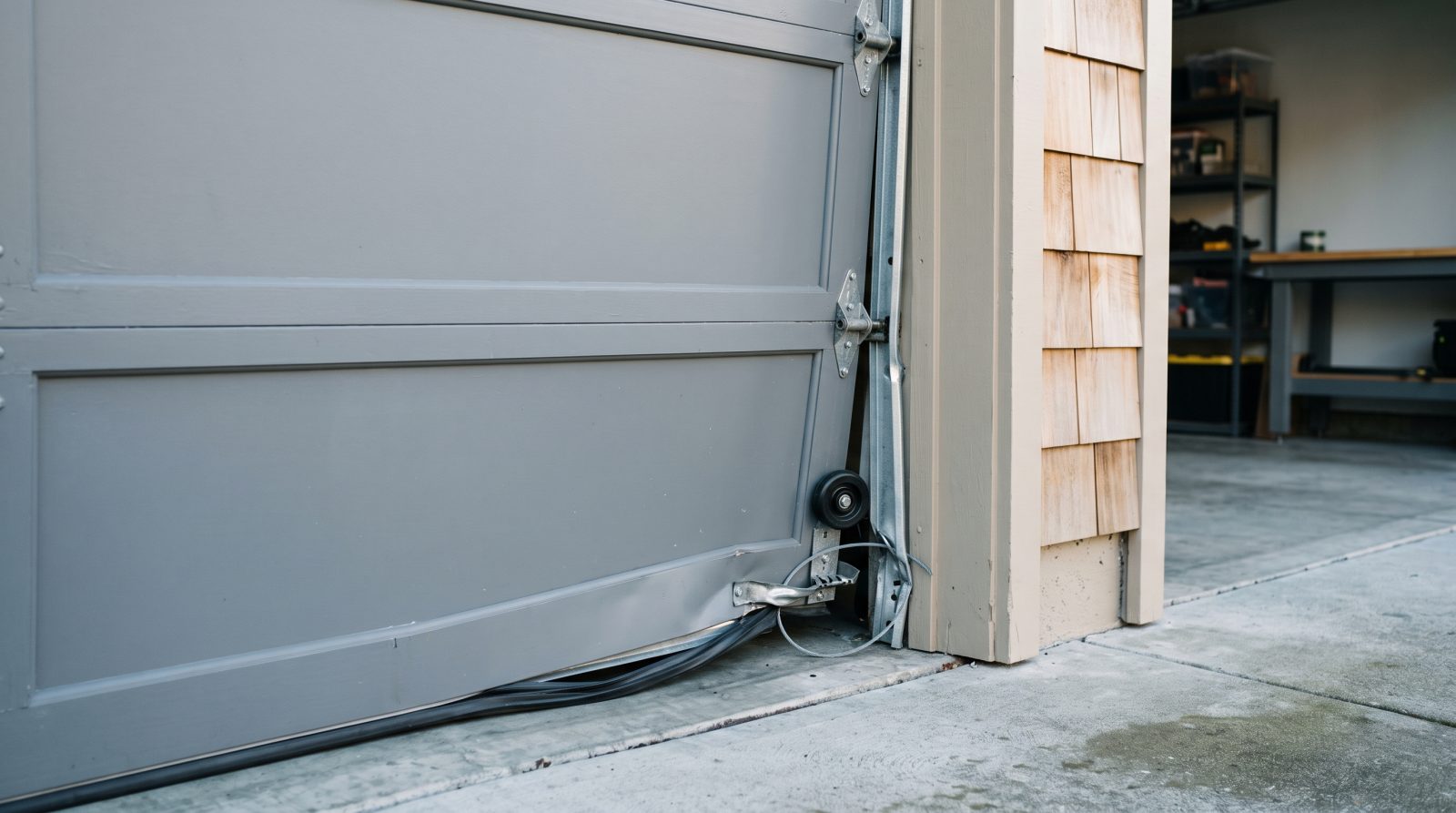
Your garage door rides on a pair of vertical and horizontal tracks mounted to each side of the opening. Small rollers attached to the edges of each panel sit inside those tracks and let the door travel up and over. When a door goes "off track," one or more of those rollers has come out of its channel, or the track itself has bent or pulled loose from the wall - so the door can no longer follow its intended path. The result is a door that sits at an angle, sags on one side, or gets wedged partway open.
It is important to understand that the tracks do not carry the weight of the door - the spring system does. The tracks only guide it. That distinction matters because a door that has jumped the track is often still under full spring tension while hanging from a compromised path. That combination of stored energy and a door that can no longer move predictably is what makes an off-track door genuinely hazardous, not just inconvenient.
- A roller has popped out of the vertical or horizontal track
- The track is visibly bent, kinked, crimped, or pulled away from the framing
- The door sits crooked, sags on one corner, or is jammed at an angle
- The opener grinds, hums, or stops because the door binds against the track
- A loud bang or pop was heard right before the door stopped working correctly
Why garage doors go off track in the Sacramento area
Most off-track calls trace back to a handful of root causes, and several of them are amplified by how we live and drive here in the valley. The single most common trigger is a vehicle bumping the door or the track - a fender tap while pulling into a tight Midtown driveway or a tall SUV nudging a partially open door is enough to knock rollers loose or flatten a section of track.
Sacramento's climate plays a quieter role. Long, hot summers with triple-digit stretches dry out and degrade the original nylon or plastic rollers, lubricant bakes off, and worn rollers start to wobble and skip out of the channel. Garages on the west side and in older neighborhoods like East Sacramento and Curtis Park often have doors that have been opening tens of thousands of cycles for decades - and worn hardware eventually lets go. A broken or loose lift cable is another frequent culprit: when one cable slips off its drum, that corner of the door drops and pulls the rollers out of alignment. Finally, loose track brackets, an obstruction left in the track, or a door that was knocked off level after an opener problem can all send a door off its path.
- Impact from a vehicle, ladder, or bike against the door or track
- Worn, cracked, or dried-out rollers - accelerated by valley heat
- A broken or slipped lift cable dropping one side of the door
- Loose or bent track brackets letting the track shift out of true
- Debris, a forgotten tool, or a stored item jammed in the track channel
- An obstruction or a hard stop that knocked the door off level
Why you should never force an off-track door back on
The instinct is understandable: the roller is right there, the door is just sitting crooked, and it feels like a firm shove will pop everything back into place. Please do not. An off-track garage door is still connected to a spring system holding a significant amount of stored energy. When you push, pry, or yank on a door in that state, you can release that energy suddenly - the door can slam down or snap sideways with enough force to break fingers, hands, and toes.
Forcing it also tends to turn a small repair into a large one. A single roller out of the channel is a quick fix. But shoving the door can bend more of the track, crease the panels, fray or break a cable, or strip the opener gears - converting a minor service call into a panel-and-hardware replacement. There is also a hidden trap: people sometimes assume the door is off track when the real problem is a snapped torsion spring or a failed cable. Putting hands on a door in that condition is exactly when serious injuries happen. The safe move is to stop, leave the door where it is, keep kids and cars away from it, and let a mobile tech assess it under controlled conditions.
- The door is under spring load and can drop or snap without warning
- Forcing it commonly bends more track, creases panels, or breaks cables
- Pushing can strip opener gears, turning a small fix into a big one
- What looks like "off track" can actually be a broken spring or cable
- Leave the door in place, keep people and vehicles clear, and call for service
How our mobile off-track repair works
Because we are a mobile service, there is no shop to tow your door to - we bring the repair to your driveway. When a tech arrives, the first step is always to safely relieve and control any spring tension and secure the door so it cannot move unexpectedly. Only then do we diagnose the true cause, because a roller that jumped the track is usually a symptom of something else - a worn roller, a bent section, a loose bracket, or a cable that came off its drum.
From there the work is methodical: reseat or replace the affected rollers, straighten or replace any damaged track, re-tension and reseat cables, re-square and level the door, and re-secure brackets to the framing. We then run the door through several full cycles by hand and with the opener to confirm it travels smoothly, sits level, and reverses properly on the safety sensors. We carry common rollers, brackets, and track hardware so most off-track repairs can be completed in a single same-day visit across Sacramento, Elk Grove, Folsom, Roseville, Citrus Heights and nearby communities. If we find a deeper issue - like a failing spring system or panels too damaged to ride true again - we will show you exactly what we see and walk you through the options before any further work.
- We come to you - serving Sacramento and the surrounding neighborhoods
- Spring tension is safely controlled and the door secured first
- Rollers, track, cables, and brackets are repaired or replaced as needed
- The door is re-leveled, re-squared, and tested through full cycles
- Safety reversal is verified before we consider the job done
- Common parts on the truck mean most repairs finish same-day
Preventing the next off-track failure
Once your door is back on track, a little maintenance goes a long way - especially given how hard Sacramento summers are on garage hardware. The most valuable habit is a quick visual and listening check every month or two: watch the door open and close, and look for a roller that wobbles, a track section that flexes, or a corner that lags behind the other. Catching a worn roller before it skips out of the channel is far cheaper and safer than recovering a door that has already dropped.
Keep the track channels clear of stored items, bikes, and debris, and never lean ladders or tools against the door. Have the rollers and hinges lubricated periodically with a proper garage-door lubricant - not a generic spray that attracts grit and bakes off in the heat. If your rollers are the original builder-grade plastic and your home is more than a decade or two old, upgrading to better rollers during a service visit can dramatically reduce the odds of a repeat. And the moment you hear a new bang, grind, or scrape, treat it as the door asking for help before it fails completely.
- Do a quick look-and-listen check on the door every month or two
- Keep the track channels and the area around the door clear
- Have rollers and hinges lubricated with proper garage-door lubricant
- Consider upgrading worn builder-grade rollers on older homes
- Address new noises early - before a roller skips the track for good