Start With Material: What Holds Up in the Central Valley
Material is the foundation of every other decision, because it sets the look, the weight, the maintenance, and how the door behaves through a Sacramento summer. Our region punishes the wrong choice quickly: south- and west-facing doors absorb relentless afternoon sun from May through September, while winter brings damp tule fog and cooler nights. The goal is a material that resists heat distortion and fading, shrugs off dust and hard-water spotting from sprinklers, and does not demand constant upkeep.
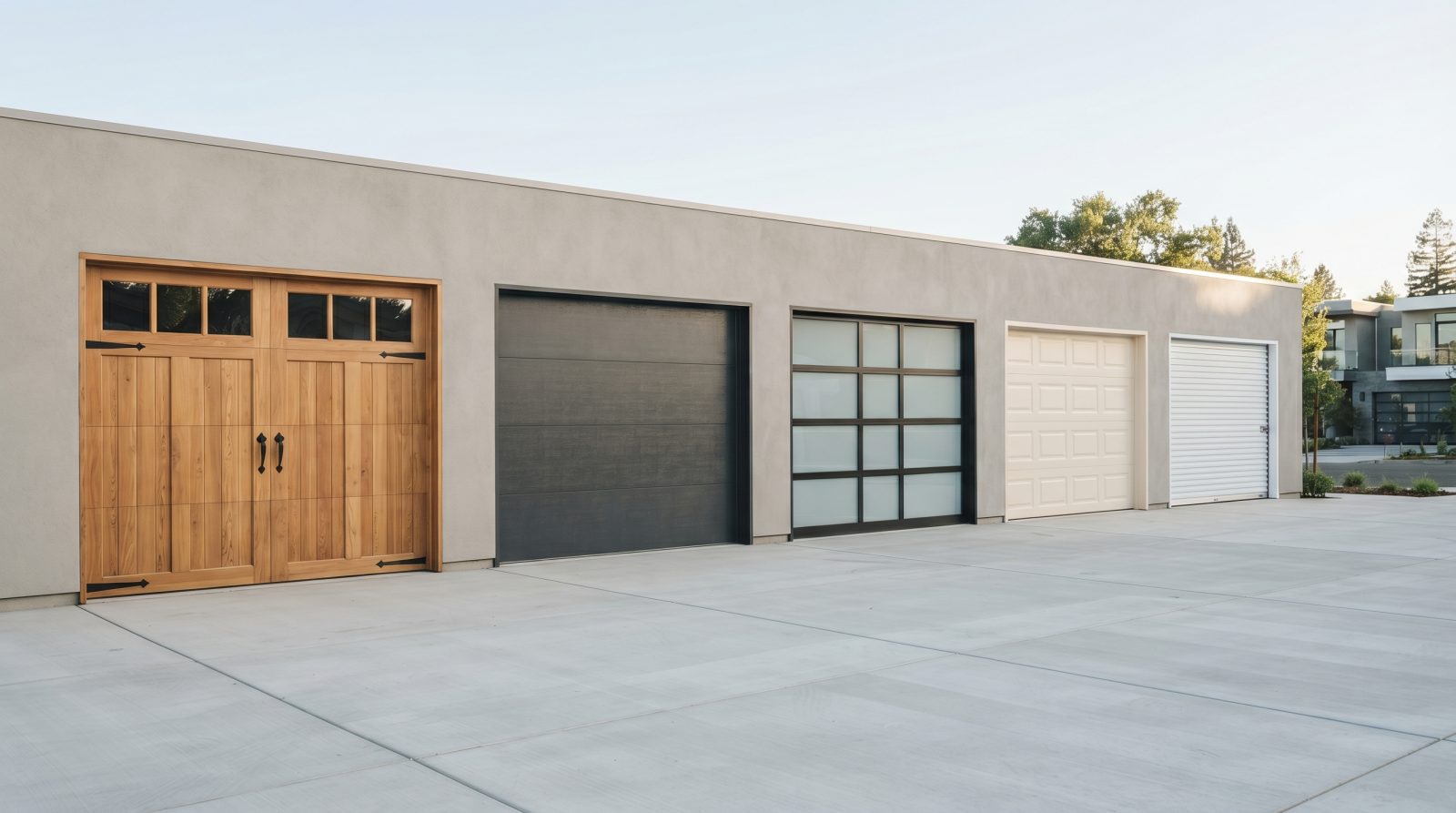
Steel is the most common choice across Sacramento for good reason. It is strong, secure, dimensionally stable in heat, and available in nearly any color and panel style. Modern steel doors use baked-on finishes that resist the fading you would otherwise see on a sun-blasted Elk Grove or Natomas elevation. Aluminum with glass is popular on contemporary homes in East Sacramento and midtown remodels, offering a light, modern look, though large glass sections gain heat and should be paired with the insulation choices below. Composite and faux-wood overlays give you the warm look of timber, fitting in older Land Park and Curtis Park neighborhoods, without the cracking, repainting, and warping that real wood suffers in our dry-hot, then-damp climate.
Genuine wood doors are beautiful and authentic to certain historic homes, but they are the highest-maintenance option here. The annual swing from bone-dry 105-degree afternoons to foggy winter humidity makes wood expand, contract, and check, so plan on regular sealing and refinishing if you fall in love with the real thing. When we visit, we look at your home's orientation, exposure, and existing trim before recommending a material, because the right answer on a shaded north-facing garage is often different from a door baking in full western sun.
- Steel: best all-around for Sacramento heat, security, value, and color/finish range
- Aluminum + glass: modern look for contemporary homes; expect more heat gain through glass
- Composite/faux-wood: the wood aesthetic for historic neighborhoods, far less upkeep
- Real wood: stunning but high-maintenance in our dry-then-damp climate; budget for sealing
- Match material to sun exposure, your home's age and trim, and how much upkeep you want
Choose a Style That Fits Your Home and Your HOA
Style is where curb appeal is won or lost, and in Sacramento it is also where many homeowners run into HOA rules. The two broad families are traditional raised-panel and short-panel doors, which suit the vast majority of tract and ranch homes across the metro, and carriage-house styles, which mimic the look of old swing-out barn doors while operating as a modern sectional door. Carriage-house designs, often with decorative hardware and an upper row of windows, add character to craftsman bungalows and newer homes alike. Flush and contemporary flat-panel doors, frequently in aluminum and glass, suit the modern infill and remodels you see around midtown and East Sac.
Before you fall for a design, check your community's rules. Master-planned and newer neighborhoods, common in Natomas, Elk Grove, parts of Roseville-adjacent Sacramento County, and many gated communities, frequently have HOA architectural guidelines that limit door color, window placement, and overall style. We routinely help homeowners pick a door that satisfies those guidelines while still looking distinctive, so it is worth confirming any approval requirements before ordering. In older, non-HOA neighborhoods you have far more freedom, but matching the door to the home's era still pays off in resale appeal.
Windows and color deserve their own thought. A row of top-section windows brightens a dark garage and softens a large blank door, but on a west-facing elevation that glass adds heat, another reason insulation and glazing choices interact. For color, lighter tones reflect more of our intense summer sun and tend to show less heat-related stress over time, while darker, on-trend colors look striking but absorb more heat on south and west exposures. We help you weigh the look you want against how the door will actually perform on your specific wall.
- Traditional raised/short-panel: the safe, widely-fitting choice for ranch and tract homes
- Carriage-house: adds character to bungalows and newer builds without swing-out hassle
- Contemporary aluminum/glass: clean, modern fit for midtown and East Sac remodels
- Confirm HOA architectural rules on color, windows, and style before ordering
- Lighter colors reflect summer heat; top windows add light but also heat on sunny walls
Insulation and R-Value: Why It Matters More Here Than You Think
Insulation is the single most underrated garage door decision in Sacramento, especially if your garage is attached to the house, used as a gym, workshop, or hangout, or shares a wall with a bedroom. Insulation is measured in R-value: the higher the number, the better the door slows heat transfer. In a climate where attached garages routinely turn into ovens on summer afternoons and that heat migrates into adjacent rooms, a well-insulated door directly affects how hard your air conditioning has to work and how usable the space stays.
Doors generally come in three tiers. Single-layer (non-insulated) steel is the cheapest and fine for a fully detached garage you only use for parking, common with the separate garages behind older Land Park and Curtis Park homes. Double-layer doors add a layer of polystyrene or polyurethane foam for a meaningful jump in R-value and a noticeably quieter, more solid door. Triple-layer doors sandwich thick polyurethane foam between two steel skins for the highest R-values, the best temperature control, the quietest operation, and the most dent resistance. For attached garages and any conditioned or frequently used space in our heat, we typically steer homeowners toward a quality insulated double- or triple-layer door.
Insulation also pairs with two things people forget. First, weather seals: even a great door leaks hot air and lets in our fine Central Valley dust if the bottom seal and perimeter weatherstripping are worn, so factor those in. Second, glass: if you want windows, ask about insulated or low-emissivity glazing so the bright look does not undo your R-value on a west-facing wall. When we measure on site, we will tell you honestly whether your garage's use and exposure justify stepping up the insulation or whether a simpler door is the smarter spend.
- R-value = resistance to heat transfer; higher is better for attached and used garages
- Single-layer: lowest cost, fine for a detached park-only garage
- Double-layer foam: big comfort and noise improvement, strong value for most homes
- Triple-layer polyurethane: top insulation, quietest, most dent-resistant for living-adjacent garages
- Don't forget fresh weather seals and insulated glass to protect your R-value and block dust
Budget Smart: Where the Money Goes (Industry Ranges)
Garage door pricing covers a wide span because material, insulation, size, windows, and hardware all move the number. The figures below are general industry ranges to help you plan, not quotes; your actual price depends on your exact door, opening size, and condition of the existing framing and opener, which we confirm in person. As a rough national guide, a basic single-layer steel single-car door commonly falls in the lower hundreds of dollars for the door itself, mid-tier insulated steel doors often run from several hundred into the low thousands, and premium insulated, custom, carriage-house, or full glass-and-aluminum doors can reach several thousand dollars or more. Installation and any new opener, springs, or track are typically additional.
The cheapest door is rarely the best value in Sacramento. Spending a little more on an insulated, quality-finished steel door usually pays back through lower cooling load on attached garages, better fade resistance under our sun, fewer repairs, and stronger curb appeal at resale. Conversely, there is no need to over-buy a triple-layer custom door for a detached garage you only park in. Smart budgeting means matching the spend to how the space is actually used and how much sun the door takes.
A few cost factors are easy to overlook. Double-car doors and oversized or custom openings cost more than standard single doors. Windows, decorative hardware, and upgraded finishes add up. If your existing opener, springs, rollers, or track are worn, replacing them with the door is often more cost-effective than doing it piecemeal later. And because we are a mobile, we-come-to-you service, you skip the showroom trip; we bring options and measurements to your driveway. When you are ready, you can call or request a free quote and we will give you a clear, honest breakdown for your specific home, same-day where we can.
- Treat all figures as industry ranges for planning, not a quote for your door
- Basic single-layer steel: lower hundreds for the door; mid-tier insulated: hundreds to low thousands
- Premium insulated, custom, carriage-house, or glass/aluminum: several thousand and up
- Installation, openers, springs, and track are usually separate line items
- Match spend to garage use and sun exposure; insulated steel is the value sweet spot for most homes