What a Real Wood Garage Door Actually Is
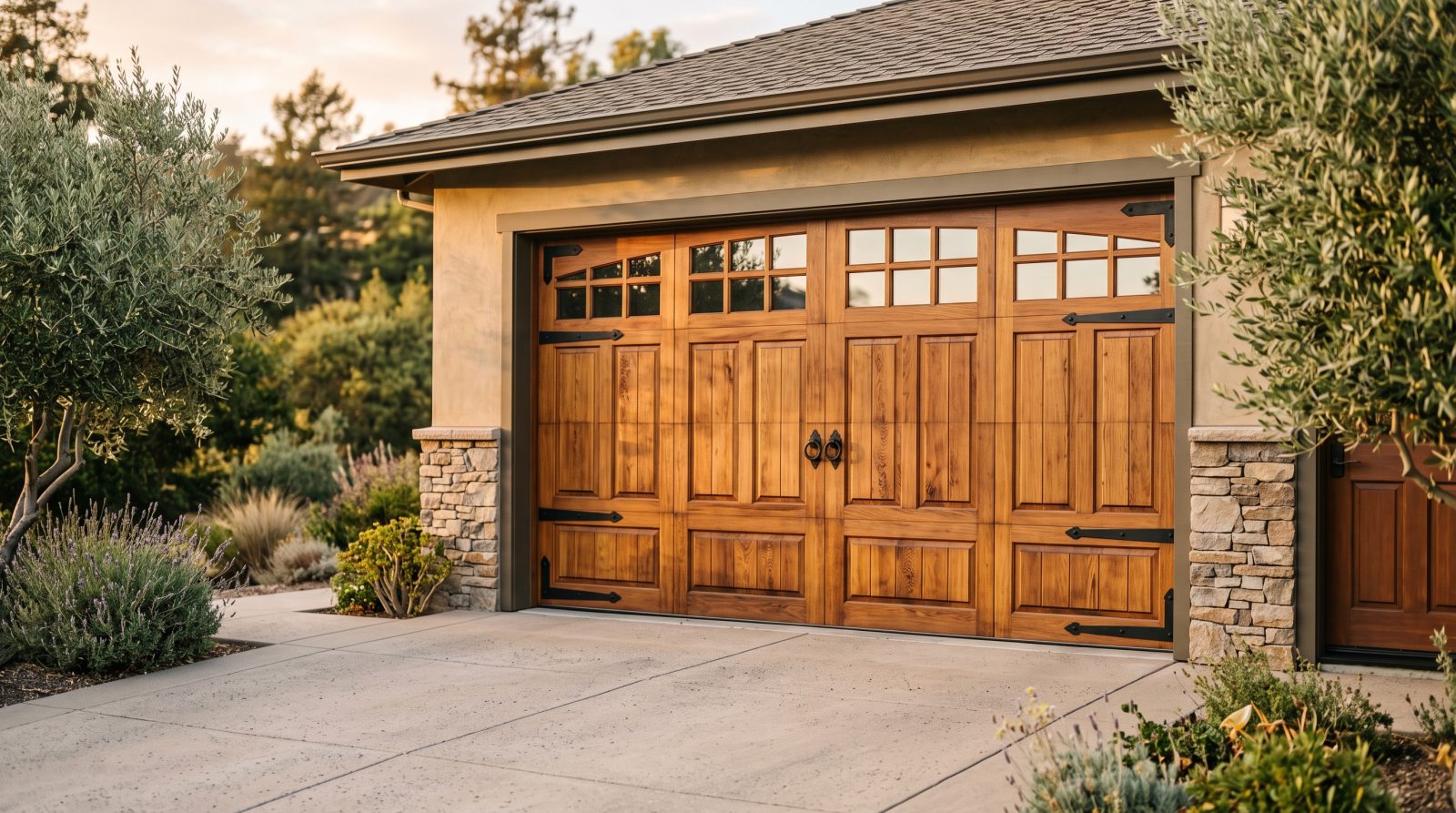
The term "wood garage door" covers a wide range, and knowing where your door sits in that range changes everything about how it should be maintained and repaired. At one end are solid-wood and solid-plank doors built from cedar, redwood, mahogany, or fir, often custom-made and genuinely heavy. In the middle are engineered or composite-core doors with a real wood overlay or veneer, which give you the look of timber with more dimensional stability. At the other end are steel or composite doors with a faux-woodgrain finish, which are not wood at all even though they read as wood from the curb. Each behaves differently in Sacramento's heat and humidity swings, and each calls for a different repair approach.
A true wood door is a system, not a slab. The visible panels sit in a frame of stiles and rails, and that frame carries the weight while allowing the panels to expand and contract with the seasons. The door hangs on rollers in steel tracks and is counterbalanced by torsion or extension springs that do the actual lifting. Because solid wood is heavy, the spring system on a wood door is tuned to that specific weight, which is why swapping in the wrong spring, or letting the wood soak up water and gain weight, throws the whole balance off.
When we arrive at a Sacramento home, the first thing we do is identify exactly which kind of door you have. A solid mahogany carriage door and a steel door with woodgrain stamping might look similar in a photo, but they age, fail, and get serviced in completely different ways. Getting that identification right is what keeps a repair honest and keeps you from paying to solve a problem your door doesn't have.
- Solid wood: cedar, redwood, mahogany, fir; heaviest, most authentic, most maintenance
- Wood overlay on engineered core: real wood look with better resistance to warping
- Faux-woodgrain steel or composite: not wood, but mimics the look with far less upkeep
- Every true wood door is counterbalanced by springs tuned to its specific weight
- Correct material identification comes first, before any repair or quote
Why Wood Doors Suit Sacramento Homes
Sacramento's older neighborhoods were largely built before steel doors existed, and a real wood door simply belongs on them in a way a flat steel panel never quite will. On a 1920s craftsman in Land Park or a brick Tudor in the Fab 40s, a stained or painted wood carriage-style door completes the elevation, reinforcing the home's period character and often its value. Many homes in East Sacramento, Curtis Park, and Midtown sit on tree-lined streets where curb appeal carries real weight, and a wood door is one of the highest-impact upgrades you can make to the front of the house.
Beyond looks, wood offers genuine design flexibility. It can be stained to show off grain, painted any color to match trim, or built in carriage-house, recessed-panel, or full-view glass-and-wood configurations. Because so much of it is custom, a wood door can be sized and styled to fit an unusual opening on an older home where a stock steel door would look forced. For homeowners in newer master-planned areas like Natomas, El Dorado Hills, or parts of Roseville and Folsom, a wood or wood-look door can be the detail that separates a house from the identical floor plans around it, though it is always worth checking your HOA's approved materials and color list first.
Wood is also a good insulator on its own, and a well-built solid-wood or wood-clad insulated door can help keep a west-facing Sacramento garage from turning into an oven on a 100-plus-degree July afternoon. That said, the trade-off is honest: the same character that makes wood special is tied to the upkeep it needs, which is exactly what the next section is about.
- Period-correct fit for craftsman, Tudor, and bungalow homes in Land Park, East Sac, and Curtis Park
- High curb-appeal return on tree-lined, design-conscious streets
- Custom sizing and styling for the irregular openings common on older homes
- Stain, paint, glass, and carriage-house options for true one-of-a-kind looks
- Check HOA-approved materials and colors in Natomas, El Dorado Hills, Roseville, and Folsom first
How Sacramento's Climate Tests Wood, and How to Protect It
Sacramento gives wood a tougher year than most cities realize. Summer brings long stretches of dry, triple-digit heat and intense Valley sunlight that fades stain, breaks down clear finishes, and pulls moisture out of the wood until panels can crack or check. Then winter arrives with cool, damp fog and rain off the Delta, and the wood absorbs moisture, swells, and gains weight. That repeated swing, drying and shrinking in summer, swelling in winter, is the single biggest enemy of a wood door here. It is what loosens joints, splits panels, and slowly throws a perfectly balanced door out of alignment.
The defense is finish and water management. A wood door needs a quality exterior finish, sealed on all six sides including the top and bottom edges, because an unsealed bottom edge wicks up water and is where rot usually starts. On a south or west exposure, which takes the worst of the Sacramento sun, that finish wears faster and needs renewing sooner, often every couple of years rather than every several. Keeping sprinklers from spraying the door, clearing debris from the bottom seal, and addressing peeling finish before bare wood is exposed all dramatically extend a door's life.
Climate stress also shows up in the mechanical parts. As a wood door swells and gains weight in a wet winter, the springs that were balanced to its summer weight now have to lift more, which strains the spring system and the opener and can leave the door feeling heavy or refusing to hold position halfway. We frequently get called for a door that "suddenly" got heavy when the real story is seasonal moisture plus a spring system that was never rechecked. When we service a wood door, we look at the wood and the balance together, because on a real wood door the two are inseparable.
- Summer UV and heat fade finish and dry out panels until they crack or check
- Winter Delta damp swells wood, adds weight, and loosens joints
- Seal all six sides, especially the bottom edge, to stop wicking and rot
- South- and west-facing doors need finish renewed more often
- Keep sprinklers off the door and the bottom seal clear of debris
- Recheck spring balance seasonally, since swelling changes the door's weight
Common Wood Door Problems We Repair On-Site
Because we are a mobile operation, we bring the shop to your driveway and handle the great majority of wood door issues right there. The most common calls involve finish failure and early water damage: peeling or chalking finish, gray weathered patches, and soft or swollen bottom rails where moisture has gotten in. Caught early, much of this is repairable with surface preparation, repair of the affected area, and a fresh sealed finish, far less costly than letting rot spread until a panel or the whole door has to be replaced.
We also see a lot of warping and sticking. A door that drags on one side, won't seal flat against the floor, or has gaps that let light in is usually telling you the wood has moved or the door has fallen out of square. Sometimes the fix is adjustment, fresh weatherstripping, and rebalancing; sometimes a single damaged section can be repaired or rebuilt rather than scrapping the door. Hardware on wood doors takes a beating too, sagging hinges, worn rollers, loose carriage-style decorative hardware, and the heavier weight of solid wood means worn rollers and dry hinges wear out faster and should be kept lubricated and replaced before they fail.
The most safety-critical wood door repair is the spring system. Solid wood doors are heavy, and the torsion or extension springs that lift them store a tremendous amount of energy. A broken or mismatched spring on a wood door is dangerous to work on without the right tools and training, and it is not a DIY job. This is work to leave to a professional, and it is exactly the kind of call we are equipped to handle on-site, same-day where possible, so you are not left with a heavy door you can't safely open.
- Peeling, chalking, or faded finish and early water damage on bottom rails
- Warping, sticking, and doors that no longer seal flat to the floor
- Sagging hinges, worn rollers, and loose decorative carriage hardware
- Section repair or rebuild instead of full replacement where the door allows
- Broken or mismatched springs, heavy and dangerous, handled by professionals only
Repair, Refinish, or Replace: Making the Call and What It Costs
Homeowners are often surprised by how much life a well-built wood door has left in it. The decision usually comes down to three things: how sound the structure is, how far any water damage or rot has spread, and how the cost of restoring the door compares to replacing it. A solid wood door with surface finish problems and good bones is almost always worth refinishing. A door with widespread rot, delamination, or multiple cracked structural members may be at the point where replacement is the more sensible investment, especially if the springs and hardware are also at end of life.
On cost, it helps to think in honest industry ranges rather than a single number, because every wood door is different. As a general guide for the Sacramento area, refinishing or refreshing a wood door's finish typically falls in the lower hundreds of dollars when done as a service; spring replacement and hardware work are a separate moderate cost driven by the door's weight and parts; and a brand-new custom solid-wood door is the most expensive path by a wide margin, often running into the thousands once materials, build, and installation are included. Wood-look composite or steel doors sit well below custom wood while keeping much of the appearance. These are ranges to set expectations, not quotes, your exact figure depends on the door, the materials, and the condition we find on-site.
The honest trade-off to weigh is ongoing upkeep. A real wood door rewards you with looks nothing else matches, but it asks for refinishing on a regular cycle, more so on sun-baked exposures. If you love that character and don't mind the maintenance rhythm, wood is worth it. If you want the wood look with far less work, a high-quality faux-woodgrain door is a legitimate choice. Either way, we will give you a straight assessment of what your door needs and what it would cost to repair versus replace, so you can decide with the full picture in front of you. Call or request a free quote and we'll come take a look.
- Repair or refinish when the structure is sound and damage is on the surface
- Lean toward replacement with widespread rot, delamination, or multiple failing members
- Finish refresh: lower hundreds; springs/hardware: moderate; new custom wood door: into the thousands (industry ranges, not quotes)
- Wood-look composite or steel costs far less than custom wood while keeping the look
- Wood's payoff is unmatched character; its cost is a regular refinishing cycle
- We give a straight repair-versus-replace assessment on-site, mobile and same-day where possible