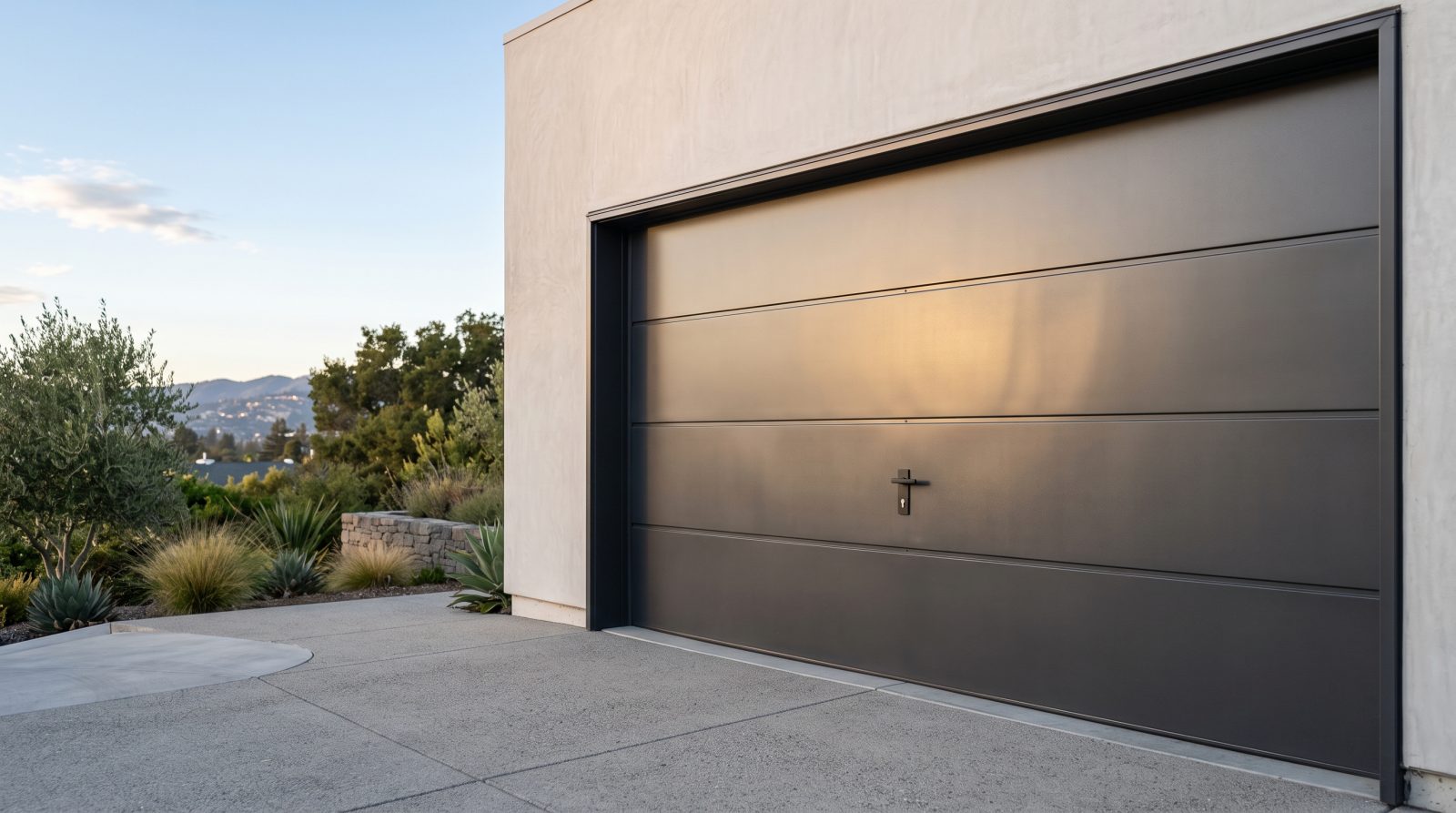
Why Steel Doors Make Sense in the Sacramento Valley
Sacramento's climate is hard on garage doors in ways homeowners don't always anticipate. Long stretches of intense summer sun bake a south- or west-facing door, while winter brings damp fog and the occasional driving rain off the Delta. Steel handles this range better than most materials. Unlike wood, it won't warp, swell, or rot when humidity spikes, and unlike some lighter composites it holds its shape under the thermal stress of a 105-degree afternoon followed by a cool valley evening.
Steel is also the most common door material in the region's housing stock, from older neighborhoods like Tahoe Park and Curtis Park to newer communities in Natomas, Roseville, and Folsom. That ubiquity matters: parts, sections, springs, and hardware for steel doors are widely stocked, which usually means a faster repair and fewer special-order delays. For a homeowner who wants a door that simply works year after year with minimal fuss, steel is often the practical default.
The one honest trade-off is that bare or thinly painted steel can show surface rust if the finish is scratched and left unaddressed, especially on the bottom panel that takes splashback from sprinklers and rain. The good news is that modern steel doors are factory-coated, primed, and painted to resist corrosion, and a scratched spot is easy to touch up before it spreads.
- Resists the warping and rot that plague wood doors in foggy, damp valley winters
- Holds shape under Sacramento's extreme summer heat on sun-exposed elevations
- Widely stocked parts and sections across the metro, supporting faster repairs
- Factory primer and paint resist rust; minor scratches are simple to touch up
Understanding Steel Gauge and Door Construction
Not all steel doors are built the same, and the difference comes down to gauge and layering. Gauge measures the thickness of the steel skin, and counterintuitively, a lower number means thicker, stronger steel. Lighter doors often use thinner skins, while heavier-duty doors use a thicker gauge that resists dents and stands up better to daily bumps, kids, and the occasional backing-up mishap.
Construction is typically described as single-layer, double-layer, or triple-layer. A single-layer door is one sheet of steel with no insulation, the most basic and lightest option. A double-layer door adds a core of insulation behind the steel, improving thermal performance and quieting the door. A triple-layer door sandwiches insulation between a steel front and a steel or composite back skin, producing the strongest, quietest, best-insulated door of the three. For an attached garage that shares a wall with living space, or a garage used as a workshop or gym, the step up to a double- or triple-layer door is usually worth it in this climate.
The rigidity of the door also affects how your opener and springs perform. A well-built, properly balanced steel door puts less strain on the spring system and opener motor, which tends to extend the life of those components. When we service a steel door, balancing and spring tension are always part of the check, because a heavy or poorly balanced door wears hardware out faster regardless of how good the steel itself is.
- Lower gauge number = thicker, more dent-resistant steel skin
- Single-layer: basic, lightest, no insulation
- Double-layer: steel plus an insulating core, quieter and warmer
- Triple-layer: steel-insulation-steel, strongest and best-insulated option
Insulation and R-Value: What Actually Matters Here
Insulation is where steel doors earn their keep in Sacramento. A garage that bakes all summer radiates heat into adjoining rooms and turns the space itself into an oven, while an uninsulated door lets that same heat pour back out of an air-conditioned home through a shared wall. Insulated steel doors slow that heat transfer, and the measure of how well they do it is R-value, where a higher number means better insulation.
The two common insulation cores are polystyrene, a rigid foam board placed inside the door, and polyurethane, a foam injected and expanded to fill the section completely. Polyurethane generally achieves a higher R-value in a thinner section and adds rigidity, which is why higher-end insulated steel doors use it. For an attached Sacramento garage, especially one facing west into the afternoon sun, the comfort and energy difference between an uninsulated door and a polyurethane-core door is genuinely noticeable in summer.
It's worth being realistic about expectations. A garage door is one part of the thermal envelope; air sealing around the door, the condition of the bottom weather seal, and whether the garage walls and ceiling are insulated all matter too. When we assess a door, we look at the whole package, including the bottom astragal seal and side weatherstripping, because a great insulated door with a cracked, gapping seal underneath still lets hot air and dust pour in along I-80 and Highway 99 corridors where dust is constant.
- Higher R-value means better resistance to heat transfer in and out of the garage
- Polystyrene (rigid board) is the budget insulation; polyurethane (injected foam) performs better and adds strength
- West- and south-facing attached garages benefit most from insulation in the valley heat
- Weather seals and air gaps matter as much as the door core for real-world comfort
Finishes, Styles, and Curb Appeal for Sacramento Homes
Steel is far more versatile in appearance than its reputation suggests. Factory finishes range from clean flush panels to traditional raised or recessed sections, and many manufacturers now offer steel skins embossed and painted to convincingly mimic natural wood grain. For homeowners in character neighborhoods like East Sacramento or the older streets of Davis who want the warm look of wood without the maintenance, a wood-grain steel door is a popular compromise.
Color and hardware choices let a steel door complement the wide variety of architecture across the region, from Craftsman bungalows and mid-century ranches to contemporary Folsom and Roseville builds. Carriage-house styling with decorative handles and faux hinges, modern full-view-adjacent designs with window inserts, and simple long-panel looks are all achievable in steel. Window sections can bring natural light into a garage workshop, though on hot west-facing walls it's worth weighing the light against the added heat gain.
Because the valley sun is strong, the durability of the paint finish matters for curb appeal over time. Quality factory coatings resist fading and chalking far better than a quick repaint, which is one more reason a well-built steel door tends to look good for many years. If your current steel door is structurally sound but faded or has a damaged section, replacing or repairing the affected panel is often a better value than a full replacement.
- Available in flush, raised-panel, carriage-house, and wood-grain embossed looks
- Wood-grain steel offers the warmth of wood without the upkeep
- Window inserts add light but can increase heat gain on sun-facing elevations
- Durable factory finishes resist the fading and chalking that strong valley sun causes
Cost Considerations and How We Help
Steel garage door pricing covers a wide range, and being honest about the variables helps you budget. As a general industry guide, a basic single-layer non-insulated steel door sits at the lower end of the range, a double-layer insulated door in the middle, and a premium triple-layer polyurethane door with windows or decorative hardware at the upper end. Installation, removal and disposal of the old door, new hardware, and any spring or opener work add to the materials cost. These are industry ranges to set expectations, not a quote; the real number depends on your door size, the construction you choose, and the condition of your existing track, springs, and opener.
Repairs are usually far less expensive than replacement, and steel often makes targeted repair practical. A dented bottom section, a damaged panel, worn rollers, a broken spring, or failed weather seals can frequently be addressed without replacing the whole door. Because individual steel sections are widely available, swapping a single damaged panel is sometimes a real option rather than buying a whole new door, which can be a significant savings.
Everything we do is mobile and we-come-to-you across the Sacramento metro, so you don't haul anything anywhere or wait for a shop appointment. We assess the door in your driveway, explain your repair-versus-replace options in plain terms, and give you a clear price before any work begins. If you want same-day help with a damaged or stuck steel door, or you're planning a new one, call or request a free quote and we'll get you set up.
- Pricing rises with insulation layers, windows, and decorative options (industry ranges, not quotes)
- Total cost includes installation, old-door removal, hardware, and any spring or opener work
- Repairing or replacing a single steel section is often far cheaper than a full new door
- Fully mobile, we-come-to-you service across the Sacramento area with same-day availability