What Worn Rollers and Bent Tracks Actually Do to Your Door
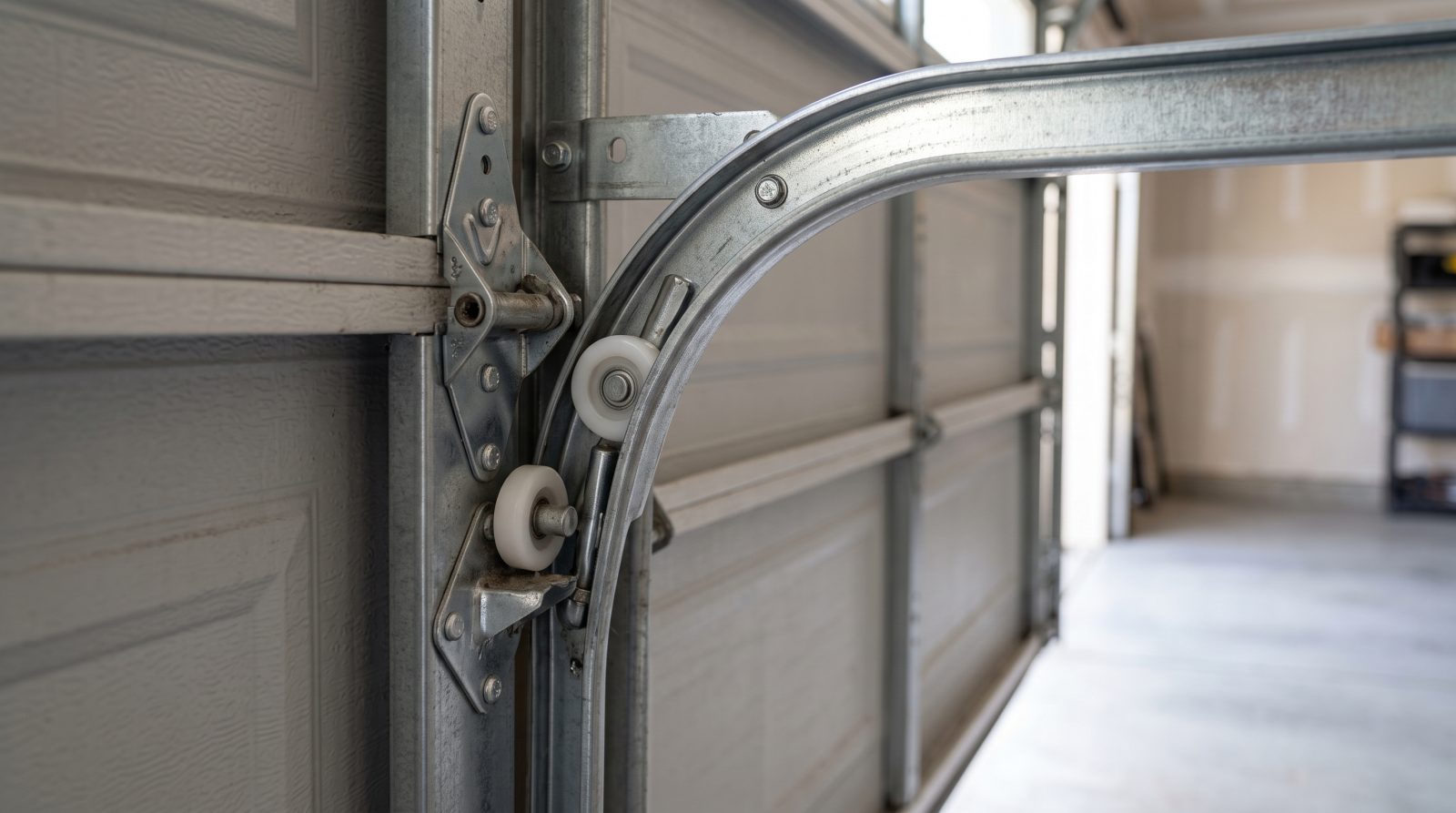
Rollers are the small wheels at the edge of each panel that ride inside the vertical and horizontal tracks. Most builder-grade doors come with plastic or low-cost steel rollers that have no sealed bearings, and after a few years of daily cycling they flatten, crack, or seize. When a roller stops spinning, it drags along the track instead of rolling, which is where that loud grinding or squealing comes from. Worse, a dragging roller pulls the door slightly out of alignment with every cycle, and that uneven load slowly bends the track and strains the opener.
Tracks can bend for several reasons: a low-speed bump from a car bumper, a door that came off its rollers and twisted, loose lag bolts that let the track shift, or simple metal fatigue over many years. A bent or pinched track forces the rollers to fight their way through the narrow spot, which is what causes the door to hesitate, jerk, or stop partway. Left alone, a misaligned track is one of the most common reasons a door eventually jumps the rail entirely and ends up hanging crooked.
Because rollers and tracks work as a system, a problem in one almost always shows up in the other. We inspect both together rather than swapping a single noisy roller and calling it done, because that approach tends to send a customer right back into the same problem a month later.
- Grinding or squealing on open and close: usually dry, flattened, or seized rollers
- Door binds or pauses at the same spot every time: a pinch or dent in the track at that height
- Visible gap between a roller and the track: alignment has drifted and the door is at risk of coming off
- Rattling and shaking: loose track brackets, worn rollers, or both working against each other
Why Sacramento Garages Are Hard on Rollers and Tracks
Sacramento's climate puts a specific kind of stress on garage door hardware. Our long, dry, triple-digit summers bake out whatever lubricant is left on the rollers and hinges, so by late summer a lot of doors that were quiet in spring start screeching. Heat also expands metal tracks slightly, which can turn a small existing misalignment into a noticeable bind. Then winter brings the Valley's damp, foggy stretches, and bare steel rollers and uncoated tracks that were never re-lubricated start to show surface rust that adds even more drag.
The housing mix across the region matters too. Older established neighborhoods like Land Park, East Sacramento, and Curtis Park often have doors and hardware that have been cycling for a long time on original builder-grade rollers, so worn-out wheels and fatigued tracks are common there. The fast-growing newer communities out in Natomas, Elk Grove, and the Folsom and Roseville side tend to have higher-cycle households, two cars in and out several times a day, which wears rollers faster than people expect. In every part of the metro, dust and fine grit, especially during dry windy spells and near construction, settle into the tracks and act like sandpaper on the wheels.
Knowing these local patterns is part of why a mobile, area-focused approach works well here. A technician who has serviced doors from Roseville down to Elk Grove can usually tell within a minute or two whether you are looking at heat-dried rollers, grit-worn wheels, or a genuinely bent track that needs straightening or replacement.
- Summer heat dries out roller and hinge lubrication, leading to late-season squealing
- Valley dust and grit grind down roller wheels and embed in the tracks
- Older homes in Land Park, East Sac, and Curtis Park often run on aging builder-grade hardware
- High-cycle households in Natomas, Elk Grove, Folsom, and Roseville wear rollers faster
How Our Mobile Roller and Track Repair Works
Everything happens at your home. When the technician arrives, the first step is a full safety check before anything is touched, because the rollers and tracks live right next to the spring system, which holds dangerous tension. We confirm the door is safe to work on, then run it through a controlled cycle to watch exactly where it binds, where the noise starts, and how the rollers are behaving inside the track.
For worn or noisy rollers, we replace them with quality sealed-bearing nylon rollers, which run dramatically quieter and last far longer than the plastic or bare-steel wheels most doors ship with. Roller replacement is done panel by panel so the door stays controlled and aligned the whole time. For track problems, we assess whether the track can be straightened, realigned, and re-secured, or whether a section is bent or kinked badly enough that replacement is the honest call. We re-set the track spacing so the rollers ride cleanly, tighten the brackets and lag bolts that anchor everything to the framing, and lubricate the moving parts properly.
Before we leave, we cycle the door several times and have you watch and listen so you can hear the difference yourself. If the inspection turns up something beyond rollers and tracks, like a worn hinge, a frayed cable, or a spring nearing the end of its life, we tell you plainly what we see, what it would cost as a labeled range, and let you decide. No surprise add-ons, no pressure.
- On-site diagnosis with a live test cycle to pinpoint the real source of the noise or bind
- Sealed-bearing nylon roller upgrades for quieter, longer-lasting operation
- Track straightening, realignment, and re-anchoring, or honest replacement when a section is too damaged
- A final test cycle you watch and hear, plus a clear walkthrough of anything else we noticed
What Roller and Track Repair Typically Costs
Pricing depends on what the door actually needs, so the most honest thing we can give you up front is a range rather than a firm number sight unseen. As a general industry guide, a full set of replacement rollers tends to fall in the lower hundreds of dollars including labor, while track realignment is usually a moderate labor charge. Replacing a damaged track section costs more than realigning an existing one because of the parts and the time involved. A door that has come completely off its tracks and twisted panels in the process is a larger job, since it may involve straightening, re-securing, and checking the rollers and cables all at once.
Several things move the number: a single-car door versus a heavy double, a standard track versus a low-headroom or high-lift setup, the condition of the surrounding hardware, and whether the issue caught early or after it caused secondary damage. The cheapest version of this repair is almost always the one done before a dragging roller bends a track or a misaligned track throws the door off the rail entirely. That is the real argument for not living with the noise.
Whatever the situation, you can request a free quote before any work begins. The technician confirms the price with you on site once the actual cause is identified, and nothing proceeds until you say yes.
- Roller set replacement: typically lower hundreds including labor (industry range)
- Track realignment: a moderate labor charge in most cases
- Track section replacement: higher than realignment due to parts and time
- Off-track recovery with panel damage: a larger job priced after on-site inspection
Don't Force a Door That's Off Its Track
If your door has come off its rollers, is hanging at an angle, or is binding hard, the most important thing you can do is stop using it. Forcing the opener against a door that is off-track or jammed can twist panels, snap rollers, overheat the opener motor, or put the spring system under uneven strain, turning a same-day fix into a much bigger repair. Disconnect the opener with the manual release cord only if the door is safely down and supported, and otherwise leave it alone until a technician can look at it.
Because we are mobile and cover the Sacramento area, getting a tech to your driveway for this kind of problem is straightforward, and same-day service is available for most common roller and track issues. We bring the rollers and the track hardware with us, so in the majority of cases the door is back to running smoothly in a single visit rather than waiting on a parts order.
A door that opens and closes quietly and evenly is not a luxury, it is a sign the whole system is healthy and not quietly grinding itself toward a failure. If yours is telling you something is wrong, the smart move is to have it looked at before the small problem becomes the expensive one.
- Stop using a door that is off-track, crooked, or binding, do not force the opener
- Use the manual release only when the door is safely down and supported
- Same-day service available for most common roller and track problems
- Mobile, we-come-to-you service across the Sacramento area with parts on the truck